What Is Pinene Terpene? Effects and What Research Shows
What is pinene terpene? It is one of the aromatic compounds in cannabis, and it gives some cannabis its pine-like scent. It is also found in pine, cedar and other conifers, and in juniper. Pinene has been studied in the lab for antibacterial activity, but benefits in people have not been shown.
Where Is Pinene Found?
Pinene terpene is found in numerous species of plants, from conifers to kitchen herbs. Pinene has a pine scent of its own and is found in certain cannabis varieties, just as it is in conifers and juniper, but a 2023 study found that terpenes explain less of the aroma differences between cannabis varieties than is often assumed. In the cannabis plant, pinene is often said to work with THC and CBD through the entourage effect, an idea that remains unproven.
Alpha Pinene and Beta Pinene: What is the Difference?
α-pinene and β-pinene are the two primary types of pinene terpene, and lab studies look at each one separately.
- Alpha-pinene: Used traditionally for respiratory infections and studied in the lab for antibacterial activity. It has not been shown to help asthma, so people with asthma should keep to their prescribed inhalers.
- Beta-pinene: The other main form; no study cited on this page tests it in people.
Whether either form changes how THC and CBD act in people has not been tested. A 2011 review proposed that pinene might offset some of THC’s effects on memory, but that remains a hypothesis.
Pinene Terpene in Cannabis Strains
Pinene is one of the terpenes measured in cannabis lab tests, and it shapes the plant’s flavor.
The amount differs across cannabis strains and from batch to batch.
Cannabis also contains a wide array of cannabinoids and other terpenes, so no single terpene explains how a product feels.
High-Pinene Cannabis Strains
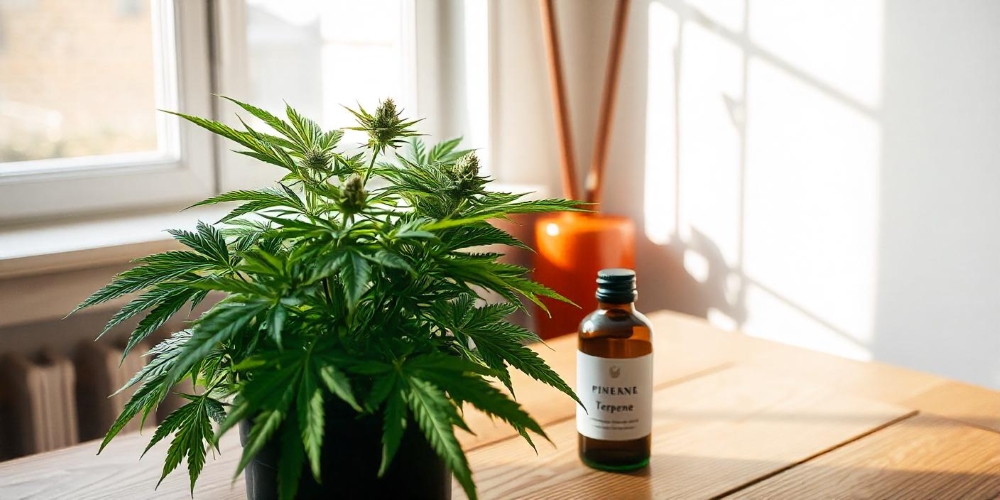
These strains are often listed as high in pinene. Lab results vary by batch, and none has been tested for health effects.
- Big Smooth: Known for a creamy, berry flavor; users describe it as relaxing.
- Blue Dream: A popular strain with a sweet, berry-like flavor; THC from any strain can impair daytime tasks such as driving.
- Cannatonic: A CBD-rich strain.
- Cotton Candy Kush: Sold for its sweet, candy-like aroma.
- God’s Gift: An earthy, pine-scented strain that users describe as relaxing.
- Grape Ape: Fruity in aroma.
- Harlequin: Known for a higher CBD content and a milder high.
- Kosher Tangie: A citrus-forward hybrid with a fresh aroma.
- Remedy: A CBD-dominant strain with subtle flavors.
Pinene Terpene Effects: What Studies Show
- Anti-inflammatory: The review cited here reports antibacterial lab results, not tests for inflammation, joint pain or swelling in people.
- Bronchodilator: A 2011 review called pinene a bronchodilator, but the human inhalation study it cites found no change in lung function shortly after exposure, and pinene is not an asthma treatment.
- Anxiety and pain: No study cited on this page tests pinene for either in people.
What Does Pinene Smell Like?
Pinene has a fresh, woodsy aroma reminiscent of a pine forest. Found in conifers and juniper, it adds a crisp, earthy scent to cannabis strains. This fragrance shapes the flavor of the cannabis that contains it.
Does Pinene Get You High?
Pinene is not a cannabinoid, and no study cited here shows that it causes a high. Whether it changes the effects of THC or CBD is not known, and claims that it sharpens focus or reduces anxiety have not been tested in people.
Pinene has not been shown to add to the medical benefits of cannabis, and no terpene profile is proven to relieve symptoms without sedation. If you’re considering medical marijuana as part of your treatment plan, a medical marijuana doctor can explain the options Florida allows and how they may interact with your other medicines.
For more about pinene and other terpenes, or how Florida’s medical marijuana rules work, contact us.
What Does Pinene Mean for Patients?
For patients, pinene is mainly known for its pine-like scent and taste; its effects on inflammation, breathing and anxiety have not been shown in people, and high-pinene strains have no proven health advantage.
Last updated October 16, 2026 by the Dr. Green Relief Editorial Team.
Medical review
Medically reviewed by Achilles Kalnoky, M.D.
Reviewed on .
He is licensed in Florida as a medical doctor, license ME115088, which you can check on the Florida Department of Health license lookup.
His review covers the medical statements in this post and the sources cited for them.
Sources
- Allenspach M, Steuer C. α-Pinene: A never-ending story. Phytochemistry. 2021 (PubMed)
- Russo EB. Taming THC: potential cannabis synergy and phytocannabinoid-terpenoid entourage effects. Br J Pharmacol. 2011 (PubMed)
- Falk AA, et al. Uptake, distribution and elimination of alpha-pinene in man after exposure by inhalation. Scand J Work Environ Health. 1990 (PubMed)
- Oswald IWH, et al. Minor, Nonterpenoid Volatile Compounds Drive the Aroma Differences of Exotic Cannabis. ACS Omega. 2023 (PubMed)



