Wisconsin Marijuana Laws
Is cannabis legal in Wisconsin? And what do Wisconsin marijuana laws say about marijuana possession or usage of CBD products? For marijuana the answer is no, though hemp and hemp CBD are legal: Wisconsin has no medical marijuana program, and a first possession conviction can bring up to 6 months in jail.

Is Marijuana Legal in Wisconsin?
No. As of October 2026, Wisconsin law makes marijuana illegal for recreational use. There is no medical marijuana program; the medical rule is narrow, and a patient with a physician’s certification may possess a non-psychoactive CBD product.
Wisconsin has no program, so no licensed medical marijuana doctor can qualify you for marijuana; a physician licensed in Wisconsin may certify a CBD product instead.
Is Medical Marijuana Legal?
No. Wisconsin has no medical marijuana program, patient card or registry. Its medical routes are narrow: a physician’s certification lets a person possess a CBD product under Wis. Stat. 961.32(2m), a prescribed FDA-approved CBD drug needs no certification, and under Wis. Stat. 961.34 the Controlled Substances Board helps a practitioner apply for a federal investigational drug permit.
Is Recreational Marijuana Legal?
No, the recreational use of marijuana is illegal in the state of Wisconsin. Simple possession is a misdemeanor on a first conviction and a Class I felony after any earlier drug conviction.
The History of Marijuana Laws in Wisconsin
Wisconsin lists THC in schedule I of its controlled substances law, chapter 961, and keeps hemp, defined in Wis. Stat. 94.55, outside that schedule; 2019 Wisconsin Act 68 rewrote the hemp law. Marijuana is also still a federally controlled substance. Since April 28, 2026, federal Schedule III covers it only in FDA-approved products or under a state medical marijuana license, which Wisconsin does not issue; all other marijuana stays in Schedule I (91 FR 22714).
The first big change came on April 16, 2014, when 2013 Wisconsin Act 267 was enacted. This legislation effectively allowed for the use of cannabidiol, commonly known as CBD, for the treatment of patients with seizure conditions, like epilepsy. The Senate had passed it 33 to 0 on April 1, 2014.
However, the 2014 law tied dispensing to an FDA investigational drug permit or to federal descheduling, and it covered only seizure disorders. In April 2017, 2017 Wisconsin Act 4 extended the exception to any medical condition with a physician’s certification.
Governor Tony Evers proposed a medical cannabis registry in his 2019 budget and legalization with a medical registry in his 2025 budget, and Representative Melissa Sargent’s 2019 bill, AB 220, would have legalized recreational and medical use. None passed.
Some local governments have acted on their own. In 2020 the Madison Common Council adopted an ordinance letting people 18 and older possess up to 28 grams under city rules, on private property or on public property with permission. Milwaukee County capped its possession fine at $1 in 2021. Local rules can change, and state charges remain possible.
Wisconsin Marijuana Laws, Topic by Topic
The sections below cover possession and purchase, home growing, reciprocity, consumption, transport, driving and expungement under state law.

Possession & Purchase
Possession of any amount of marijuana is a misdemeanor on a first conviction, punishable by up to six months in jail, a fine of up to $1,000, or both. After any earlier drug conviction, possession is a Class I felony: up to 3 years and 6 months in prison, a fine of up to $10,000, or both. The sale of marijuana is also classed as a felony, regardless of the amount, with possible incarceration times of up to 15 years for the largest quantities. Local ordinances differ, but none overrides state law; Madison’s ordinance allows up to 28 grams under city rules only.
How Much Can I Buy and Possess?
It is illegal under state law to buy or possess any amount of marijuana in Wisconsin. County and city ordinances set their own forfeitures, but once a state complaint alleges more than 25 grams, or any amount after a Wisconsin possession conviction, a city ordinance cannot be used unless the state charge is dismissed or not prosecuted; a county ordinance needs that and one more thing: the city, village or town where it happened has no marijuana possession ordinance of its own or has dismissed or not prosecuted its own case.
Where Can I Obtain Cannabis?
You cannot legally obtain marijuana anywhere in Wisconsin. There are no marijuana dispensaries, and hemp products, including hemp CBD oil, need no prescription or physician letter.
Who Can Legally Purchase Marijuana in Wisconsin?
Nobody can legally purchase marijuana in the state of Wisconsin.
Home Cultivation
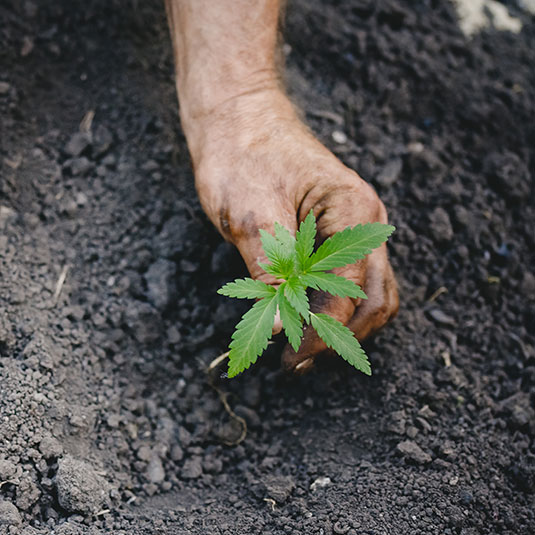
It is also illegal to grow your own marijuana plants at home in Wisconsin. Growing 4 or fewer plants is a Class I felony, with up to 3 years and 6 months in prison and a fine of up to $10,000.
Reciprocity
Wisconsin does not recognize medical marijuana programs of other states and has no reciprocity with other states.
Consumption
Outside the narrow routes above, possessing marijuana is an offense under Wis. Stat. 961.41(3g)(e), whether the purpose is recreational or medical.
Where Can I Safely Consume Cannabis?
You cannot consume marijuana anywhere in this state.

Qualifying Patients
Medical marijuana is not legal in Wisconsin, but since 2017 a certified CBD product is allowed for any medical condition, not only seizures.
Transportation
It is illegal to transport marijuana anywhere in the state of Wisconsin.
Driving
It is illegal to drive in Wisconsin with 1 ng/mL or more of delta-9 THC in your blood, impaired or not.
Expungement
For a criminal conviction, expungement is possible only if the judge orders it at sentencing, for someone under 25 at the time of the offense, and it takes effect once the sentence is completed.
How to Obtain a Medical Card?
At the moment, it’s not possible to obtain a Wisconsin medical marijuana card as this state lacks any kind of medical marijuana program.
Wisconsin’s state law on cannabis remains strict. Madison in 2020 and Milwaukee County in 2021 lowered local penalties, but every medical and adult-use bill of the 2025 to 2026 session failed to pass.
Wisconsin City Guides
