
Medical Marijuana Doctors Houston
Medically reviewed by Cheryl-Lynn Bugailiskis, M.D., Texas medical license T7799. Last reviewed November 4, 2026.
In Houston, as across Texas, low-THC cannabis needs a prescription that a Texas-licensed physician, registered in CURT as your prescriber, enters for you. You can qualify in Houston for low-THC medical cannabis under the Texas Compassionate Use Program, and the prescribing physician must have board certification in a specialty relevant to your condition. Our Texas medical marijuana card guide explains why Texas patients need no card and how a CURT prescription works instead.
Houston patients in Harris County and nearby counties use the same statewide registry as patients in Dallas and San Antonio. Patients do not register in CURT themselves; the physician enters the prescription. No state registration fee is required in Texas.
Since HB 46 took effect in 2025, more Houston patients qualify for the Texas Compassionate Use Program
HB 46 added chronic pain, traumatic brain injury, Crohn’s disease and terminal illness to the Texas list on September 1, 2025.
Since HB 46 took effect in 2025, more Houston patients qualify for the Texas Compassionate Use Program
HB 46 added chronic pain, traumatic brain injury, Crohn’s disease and terminal illness to the Texas list on September 1, 2025.


Dr. Green Relief has no Houston office and no office anywhere in Texas, and Houston patients book a telehealth evaluation by video. Texas allows only low-THC cannabis, and only a physician registered with DPS may prescribe it through Texas’ Compassionate Use Program.
The same rules apply to Houston patients and to permanent residents anywhere else in Texas. Your physician decides whether you qualify, sets the dose and the way you take it in a written treatment plan, and only DPS-licensed dispensing organizations may fill the prescription.
Under Occupations Code 169.002, the prescriber must hold a Texas license, have board certification in a specialty relevant to your condition and spend a significant part of practice treating it. Texas conditions include seizure disorders, autism, cancer, multiple sclerosis, chronic pain and PTSD, among other qualifying conditions under Texas law. Houston patients do not receive a Texas medical marijuana card, because Texas issues none; the prescription is recorded in the state registry, CURT.
BENEFITS
Upfront Pricing
Dispensing Organizations Deliver
Confidential State Registry
Texas Compassionate Use Program
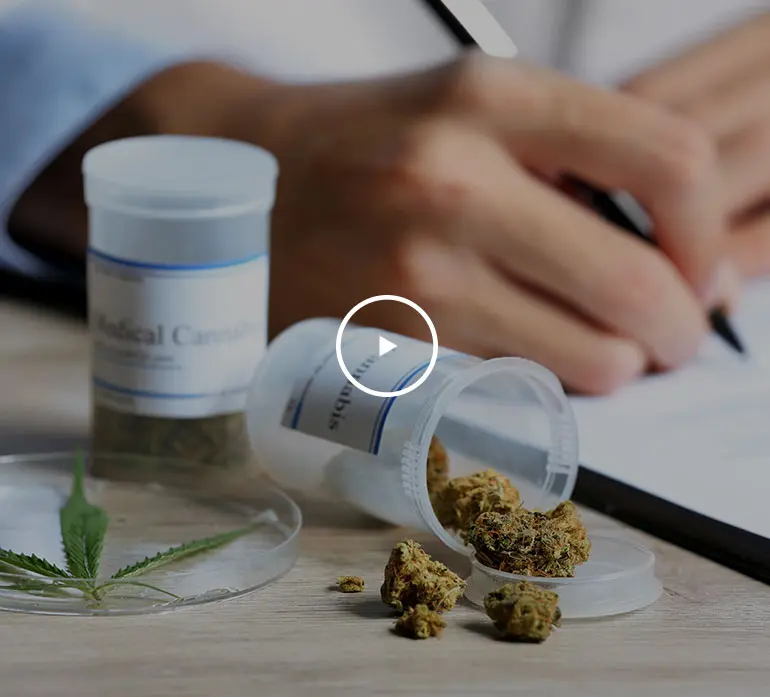
The Texas Compassionate Use Program has been expanded three times since it began. SB 339, the 2015 Texas Compassionate-Use Act, first allowed low-THC cannabis only for intractable epilepsy, as DSHS records on its low-THC cannabis page. HB 3703 (2019), HB 1535 (2021) and HB 46 (2025) each amended Occupations Code 169.003, the section that lists the qualifying conditions. Under Occupations Code 169.004, the physician must register in CURT as your prescriber before writing or renewing a prescription. Once the prescription is in CURT, Health and Safety Code 481.111(e)(1) shields you from a state possession charge, in Harris County as anywhere in Texas, for low-THC cannabis bought from a licensed dispensing organization.

Chronic pain

ALS

Epilepsy

Cancer

Spasticity

Multiple sclerosis
Parkinson’s disease

Seizures

PTSD

Autism
Texas Medical Marijuana Patient Fees
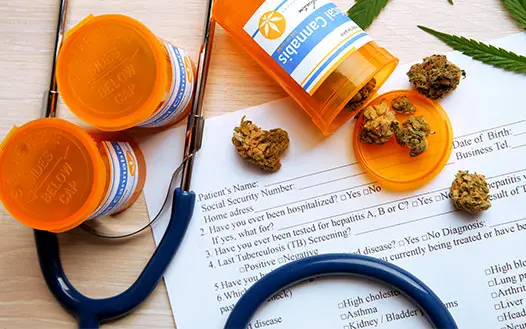
Texas charges patients no state registry or card fee; the costs are the $99 Dr. Green Relief telehealth evaluation and the products you buy.

Texas Medical
Marijuana Laws
Texas sets no age limit, so a Houston patient under 18 may qualify, and a legal guardian the physician records in CURT may pick up the prescription. Only a Texas-licensed physician registered in CURT as your prescriber can write that prescription.
Houston
Marijuana Dispensaries
Harris County is in Texas Public Health Region 6, where DPS placed two of its 12 conditional dispensing licenses in the May 8, 2026 corrected list. Conditional licensees cannot sell until DPS gives final approval, so Houston patients fill prescriptions through the three licensed dispensing organizations today.
Texas Physician Evaluation
New Patient
$99/visit

Initial Physician Consultation


Texas Physician Evaluation
Renewal
$99/visit
Follow Up Physician Consultation
Texas Physician Evaluation
Transfers
$99/visit
Follow Up Physician Consultation
FAQS
Can I visit a marijuana doctor online in Houston, TX?
Yes. Dr. Green Relief offers Houston telehealth evaluations, and under Occupations Code 111.007 a video visit must meet the same standard of care as an office visit. Dispensing organizations can deliver, so filling a prescription needs no trip.
Do Houston marijuana doctors require a referral?
No, a referral is not required. You can go directly to a Houston physician who qualifies under state law and is registered in CURT.
Is medical marijuana legal in Houston, Texas?
Yes, but only low-THC cannabis under Texas’s Compassionate Use Program, for permanent Texas residents with a qualifying condition whose physician has entered a prescription in CURT.
What should I bring to my medical marijuana appointment in Houston?
Bring a photo ID and records of your diagnosis, and be ready to confirm you are a permanent Texas resident. At the dispensary you will give your ID, last name, date of birth and the last five digits of your Social Security number.
Can out-of-state patients see a marijuana doctor in Houston?
No. Only permanent Texas residents qualify, and Texas does not fill prescriptions written in other states.
Are follow-up appointments required with a Houston marijuana doctor?
Usually, yes. Your physician must keep a treatment plan that monitors your symptoms, and each prescription covers up to a 90-day supply with up to four refills before it needs renewal.
What types of cannabis products are available in Texas?
Patients whose prescription is in CURT can buy low-THC cannabis products such as oils, tinctures, and gummies from licensed dispensing organizations. Occupations Code 169.001 defines low-THC cannabis by its THC content rather than by product type, and since September 1, 2025, the limit has been no more than 10 mg of THC per dosage unit. The same section excludes smoking as a way to take it.
How do I know if I qualify before booking in Houston?
Check the state list: epilepsy, seizure disorders, multiple sclerosis, spasticity, ALS, autism, cancer, incurable neurodegenerative diseases named by state rule, PTSD, chronic pain, traumatic brain injury, Crohn’s disease or other inflammatory bowel disease, terminal illness or a condition for which you receive hospice or palliative care, and a medical condition approved for a research program under Texas law, while you receive treatment in that program. You must also be a permanent Texas resident.
TEXAS GUIDES BY CITY
