+ Medical Marijuana CardMINNESOTA STEPS,
REGISTRY AND RULES
+ Medical Marijuana CardMINNESOTA STEPS,
REGISTRY AND RULES
HOW TO ENROLL
In Minnesota's Medical
Cannabis Registry
Facts on this page were checked against official sources, including the Office of Cannabis Management and Minnesota Statutes chapter 342, by the Dr. Green Relief editorial team. Last reviewed November 5, 2026.
To get a Minnesota medical marijuana card, you need a certification from a Minnesota-licensed health care practitioner. You then have 90 days to apply to the Office of Cannabis Management with proof of Minnesota residency. The office gives you a registry verification, not a plastic card. Minnesota charges no state enrollment fee; the fee was repealed in 2023, and enrollment lasts three years.

Minnesota Gives You a Registry Verification, Not a Card
Minnesota runs a medical cannabis patient registry program, and the Office of Cannabis Management has run it since July 1, 2024, when it took over from the Department of Health. When you enroll, the office assigns you a patient registry number and a registry verification that shows your name, date of birth and that number (Minnesota Statutes 342.52, subdivision 5). People still search for a “Minnesota medical marijuana card,” and this registry enrollment is what the state gives instead.
Your Minnesota Video Evaluation With Dr. Green Relief
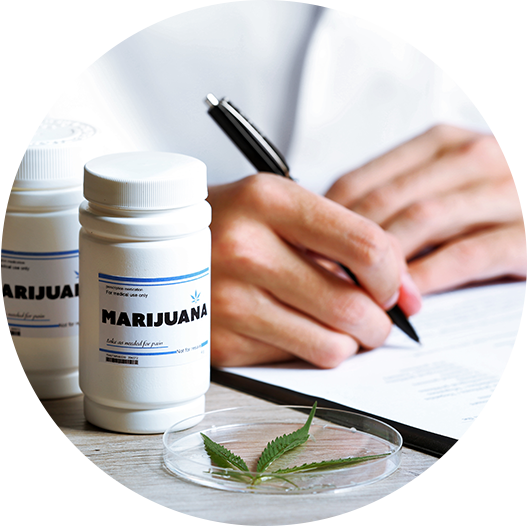
Dr. Green Relief offers video evaluations for Minnesota patients for $199. Under the Office of Cannabis Management’s 2025 rule, the practitioner may examine you remotely by secure video (Minnesota Rules 9810.4003, subpart 2). An older Department of Health rule that is still printed in Minnesota Rules (4770.4014) says the exam must be in person.
If the practitioner certifies your condition, the certification goes into the state registry and you then apply yourself. Every three years the practitioner checks whether you still qualify, and that check may be done by telehealth (Minnesota Statutes 342.55, subdivision 2).
Minnesota lets only a Minnesota-licensed practitioner who has the primary responsibility for treating your qualifying condition certify you (Minnesota Statutes 342.01, subdivision 32), so before you book, confirm the practitioner you will see meets that rule; the Office of Cannabis Management runs the patient registry.
| Fee | Amount | Term | Waiver or reduction | Who pays | Source |
|---|---|---|---|---|---|
| Dr. Green Relief video evaluation | $199 | One visit | Not applicable | You, to Dr. Green Relief | Dr. Green Relief price |
| Minnesota state enrollment fee | None | Enrollment lasts three years | Not applicable: there is no fee to reduce | No one | Laws 2023, chapter 63, article 6, section 24; Minnesota Statutes 342.52, subdivision 7 |


GET A PRACTITIONER CERTIFICATION
Your practitioner must be a Minnesota-licensed doctor of medicine, physician assistant or advanced practice registered nurse who treats your condition. They decide whether you have a qualifying condition. If you do, they file an electronic certification with the state. Veterans may instead use the veteran registry application form with proof of residency and a veteran ID card.

APPLY TO THE STATE REGISTRY
Apply on the office’s forms within 90 days of the certification date. You, your parent or legal guardian, or your spouse can apply. You give your name, address, date of birth and your practitioner’s details. You also send proof of Minnesota residency, such as a Minnesota driver’s license or state ID card.

RECEIVE YOUR REGISTRY VERIFICATION
The office must approve or deny your enrollment within 30 days. It tells both you and your practitioner. Once you are enrolled, you get a registry number and a registry verification. At a medical cannabis retailer, you show a government photo ID with your verification document or registry number.
Qualifying Medical Conditions
Cancer
Epilepsy
Glaucoma
Multiple Sclerosis
Parkinson’s Disease
PTSD
AIDS / HIV
Crohn’s Disease
Severe Chronic Or Intractable Pain
Alzheimer’s Disease
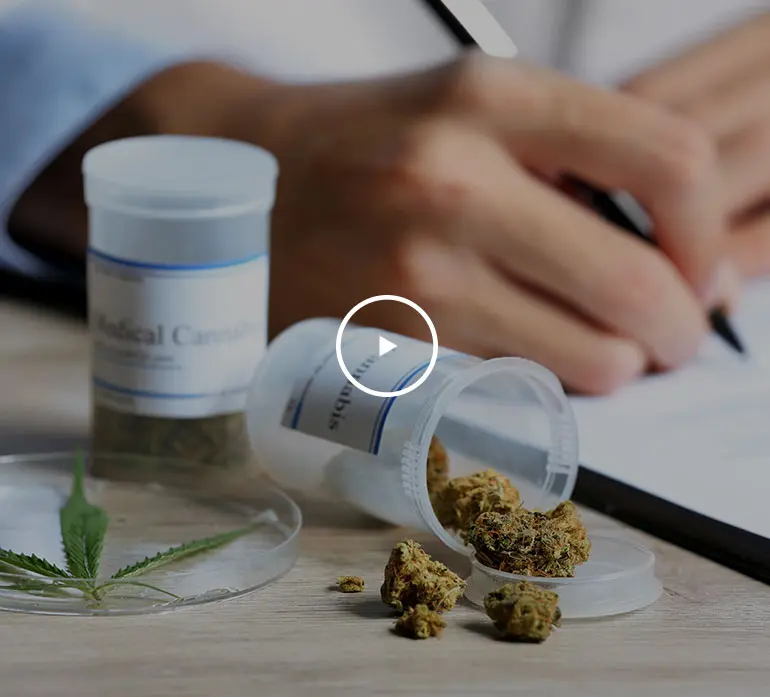
Minnesota gives you two ways to qualify. Your health care practitioner can recommend, approve or authorize cannabis for your medical condition, or you can have a diagnosis of one of the 19 conditions listed in Minnesota Statutes 342.01, subdivision 63. The list is not the only route. The listed conditions, in the statute’s words:
- Alzheimer’s disease
- autism spectrum disorder that meets the requirements of the fifth edition of the Diagnostic and Statistical Manual of Mental Disorders published by the American Psychiatric Association
- cancer, if the underlying condition or treatment produces one or more of the following: (i) severe or chronic pain; (ii) nausea or severe vomiting; or (iii) cachexia or severe wasting
- chronic motor or vocal tic disorder
- chronic pain
- glaucoma
- human immunodeficiency virus or acquired immune deficiency syndrome
- intractable pain as defined in section 152.125, subdivision 1, paragraph (c)
- obstructive sleep apnea
- post-traumatic stress disorder
- Tourette’s syndrome
- amyotrophic lateral sclerosis
- seizures, including those characteristic of epilepsy
- severe and persistent muscle spasms, including those characteristic of multiple sclerosis
- inflammatory bowel disease, including Crohn’s disease
- irritable bowel syndrome
- obsessive-compulsive disorder
- sickle cell disease
- terminal illness, with a probable life expectancy of under one year, if the illness or its treatment produces one or more of the following: (i) severe or chronic pain; (ii) nausea or severe vomiting; or (iii) cachexia or severe wasting
Minnesota Health Care Practitioners Certify Patients
Under Minnesota Statutes 342.01, subdivision 32, a health care practitioner is a Minnesota-licensed doctor of medicine, physician assistant or advanced practice registered nurse. The license must be active and in good standing. The practitioner must also have the primary responsibility for the care and treatment of your qualifying condition. The practitioner must be available to provide continuing treatment, and you must keep up regularly scheduled treatment with them (Minnesota Statutes 342.52, subdivision 6).
What Minnesota Requires Before You Enroll
Who can enroll in Minnesota's medical cannabis registry?
Minnesota residents with a qualifying medical condition can enroll. State law defines a patient as “a Minnesota resident” diagnosed by a health care practitioner (Minnesota Statutes 342.01, subdivision 59). Every applicant sends proof of residency (Minnesota Rules 9810.4000). There is no minimum age. A parent or legal guardian applies for a child, and a spouse may apply for a patient.
What proof of Minnesota residency do I need?
You need a valid, unexpired Minnesota driver’s license, instruction permit or ID card from the Department of Public Safety. If you do not have one, send another state, federal or Tribal photo ID plus at least one document with your name and current address (Minnesota Rules 9810.4000, subpart 2). For a minor, the parent or legal guardian provides the proof.
What should I bring to my appointment and my registry application?
- Proof of Minnesota residency: a valid, unexpired Minnesota driver’s license, instruction permit or ID card from the Department of Public Safety, or another state, federal or Tribal photo ID plus one document with your name and current address (Minnesota Rules 9810.4000, subpart 2)
- Medical records about your condition, if you have them
- A list of the medicines you take now, since the practitioner must advise you on drug interactions (Minnesota Rules 9810.4003, subpart 2)
- Your veteran identification card, if you apply through the veteran route (subpart 3)
Records help the practitioner but do not decide certification.
Can my Minnesota certification exam be done by video?
Under the Office of Cannabis Management’s 2025 rule, the practitioner may examine you remotely by secure video (Minnesota Rules 9810.4003, subpart 2). An older Department of Health rule that is still printed in Minnesota Rules (4770.4014) says the exam must be in person. The three-year reassessment after you enroll may be done by telehealth (Minnesota Statutes 342.55, subdivision 2).
How much does Minnesota charge to join the registry?
Nothing. Minnesota charges no state enrollment fee; the fee was repealed in 2023, and enrollment lasts three years. Because there is no state fee, there is no reduced fee to apply for. A practitioner may still charge a fee for the visit itself, as Minnesota Rules 9810.4003, subpart 5 allows.
Does Minnesota give patients a medical marijuana card?
No. Minnesota gives you a registry verification instead of a card. When you enroll, the Office of Cannabis Management assigns a patient registry number and gives a registry verification to you and to any caregiver, parent, legal guardian or spouse on your record (Minnesota Statutes 342.52, subdivision 5). Retailers with a medical cannabis endorsement can see it too.
How long does Minnesota registry enrollment last?
Enrollment lasts three years (Minnesota Statutes 342.52, subdivision 7). To re-enroll, you send the application again with a new certification dated within 90 days. Your practitioner checks every three years whether you still have a qualifying condition, and that check may be by telehealth (342.55, subdivision 2). Yearly recertification ended on July 1, 2024.
What do I show when I buy medical cannabis in Minnesota?
You show a government photo ID plus your verification document, your registry number or other proof that you are enrolled (Minnesota Rules 9810.2502, subpart 2). Your registry verification lists your name, date of birth, registry number and the name of any caregiver, parent, legal guardian or spouse on your record (Minnesota Statutes 342.52, subdivision 5).
How long does Minnesota take to approve an application?
The Office of Cannabis Management must approve or deny your enrollment within 30 days after it receives your application and certification (Minnesota Statutes 342.52, subdivision 4). It sends notice to you and to your practitioner. A denial is a final decision that you can ask a court to review under Minnesota Statutes chapter 14.
How recent must my Minnesota certification be?
Your certification must be dated within 90 days before you submit your application (Minnesota Statutes 342.52, subdivision 2). Plan to apply soon after your visit so the certification is still inside that window. The same rule applies each time you re-enroll, because re-enrollment needs the full application again.
Is there a separate route for veterans?
Yes. The office must enroll a veteran who sends a signed veteran registry application form, proof of Minnesota residency and a copy of their veteran identification card (Minnesota Rules 9810.4000, subpart 3). The usual practitioner duties do not apply to a veteran who receives care from the U.S. Department of Veterans Affairs (Minnesota Statutes 342.55, subdivision 5).
Who runs Minnesota's medical cannabis program?
The Office of Cannabis Management runs it. The Department of Health’s powers over the program moved to the office on July 1, 2024 (Minnesota Statutes 342.02, subdivision 3; Laws 2024, chapter 121). The old Department of Health page now sends readers to the office’s site, so use the office for anything current.
What has changed in Minnesota's program since 2023?
Several rules changed. The enrollment fee ended in 2023 (Laws 2023, chapter 63). On July 1, 2024, the Office of Cannabis Management took over. On that date, recertification moved to every three years and caregiver background checks ended (Laws 2024, chapter 121). Visiting patients could buy from 2025 (Laws 2025, chapter 31). Since May 27, 2026, retailers may not sell products meant to be vaporized for patients under 21 (Laws 2026, chapter 123).
What changes on January 1, 2027?
From January 1, 2027, Minnesota moves to medical cannabis endorsements for cultivation, manufacturing, retail and delivery businesses (Laws 2026, chapter 123). Medical retailers must give enrolled patients and caregivers priority service. They must also carry every product the office lists as high medical need.
How many patients are in Minnesota's program?
Minnesota had over 72,000 enrolled patients, according to the Office of Cannabis Management’s report to the Legislature dated January 15, 2026. The same report says all 87 Minnesota counties have patients in the program. Patients in Greater Minnesota named a shorter drive to a dispensary as a priority.
Who can be a caregiver in Minnesota?
A registered designated caregiver must be at least 18 and may serve no more than six registered patients at one time; patients who live together count as one (Minnesota Statutes 342.52, subdivision 9). There has been no criminal background check since July 1, 2024. A caregiver may help you take medical cannabis and pick it up from a medical retailer.
Can a parent, guardian or spouse act as my caregiver?
Yes. A parent, legal guardian or spouse of a patient may act as the caregiver (Minnesota Statutes 342.52, subdivision 10). The office must be told about the relationship, with documentation on its forms (Minnesota Rules 9810.4001, subpart 2). A parent or legal guardian also applies for a minor patient.
What protections do Minnesota registry patients have?
The law presumes enrolled patients are using medical cannabis lawfully (Minnesota Statutes 342.57). Police need a valid search warrant to see the registry. A registry verification alone is not probable cause. Employers, schools and landlords may not penalize you solely for enrolling, unless federal law or a federal benefit requires it.
Where is medical cannabis use not allowed in Minnesota?
You may not use it on a school bus or van, in a correctional facility or on child care grounds. You may not smoke or vape it on public transportation, in any public place or workplace, or where a minor would breathe it in. Driving, boating or flying while under the influence is also barred (Minnesota Statutes 342.56, subdivision 1).
How does federal law treat medical cannabis in Minnesota?
Minnesota law and federal law do not match. Since April 28, 2026, federal rules list marijuana in Schedule III only when it is in an FDA-approved product or subject to a state medical marijuana license; all other marijuana remains in Schedule I (91 FR 22714). The Minnesota protections above come from state law.
Where do Minnesota patients buy medical cannabis?
Patients buy from cannabis businesses with a medical cannabis retail endorsement and, until January 1, 2027, from medical cannabis combination businesses (Minnesota Statutes 342.51; 342.515). The office must post the products each medical retailer sells (342.54). This page names no retailer, because Minnesota bars certifying practitioners from referring patients to one (342.58).
What happens at my first Minnesota purchase?
At your first purchase, you talk with a licensed pharmacist or a certified medical cannabis consultant. That talk may be remote (Minnesota Statutes 342.51, subdivision 3). You also complete a self-evaluation at the first purchase and every three months in your first year (Minnesota Rules 9810.2502, subpart 3). Curbside pickup is allowed.
Can visiting patients buy medical cannabis in Minnesota?
Yes. A visiting patient enrolled in another state’s, territory’s or Tribal medical cannabis program may buy from a medical retailer (Minnesota Statutes 342.51, subdivision 2a). You show your home program’s registration card or equivalent document plus a valid photo ID, such as a driver’s license or state ID card. Lawmakers added this route in 2025.
Can people from other states enroll in Minnesota's registry?
No. Only Minnesota residents can enroll, because state law defines a patient as “a Minnesota resident” (Minnesota Statutes 342.01, subdivision 59). Every applicant must send proof of Minnesota residency (Minnesota Rules 9810.4000, subpart 2). People from other states use the visiting patient route with their home program’s card.
Sources:
- Office of Cannabis Management, Division of Medical Cannabis (program site), read 2026-10-29
- Minnesota Statutes 342.01: subd. 32 health care practitioner, subd. 59 patient, subd. 63 qualifying medical condition, subd. 71 visiting patient, read 2026-11-05
- Minnesota Statutes 342.02, subd. 3: transfer from the Department of Health, read 2026-10-29
- Minnesota Statutes 342.52: subds. 2 to 5, 7, 9, 10 (application, veterans, 30-day decision, registry verification, three-year term, caregivers), read 2026-10-29
- Minnesota Statutes 342.55, subds. 2 and 5: three-year reassessment by telehealth; veterans, read 2026-10-29
- Minnesota Statutes 2025, 342.51: subds. 2a (visiting patients), 3 (consultation), 5 (curbside), read 2026-10-29
- Minnesota Statutes 2025, 342.515: medical cannabis combination businesses, read 2026-10-29
- Minnesota Statutes 342.56: limitations, read 2026-10-29
- Minnesota Statutes 342.57: protections, read 2026-10-29
- Minnesota Statutes 342.58: practitioner referral ban, read 2026-10-29
- Minnesota Statutes 342.54, subd. 2: product list duty, read 2026-10-29
- Minnesota Rules 9810.4003: practitioner qualifications and duties (remote examination, subp. 2), read 2026-11-05
- Minnesota Rules 4770.4014: Department of Health rule (in-person examination, subp. 2), read 2026-11-05
- Minnesota Rules 9810.4000: patient enrollment, residency proof, veterans, read 2026-10-29
- Minnesota Rules 9810.4001: caregiver enrollment, read 2026-10-29
- Minnesota Rules 9810.2502: medical cannabis retail, read 2026-10-29
- Laws 2023, chapter 63, article 6, section 24: enrollment fee deleted, read 2026-10-29
- Laws 2024, chapter 121, article 2: OCM transfer (s. 153), three-year recertification, caregiver background check ended, read 2026-10-29
- Laws 2025, chapter 31: visiting patients (s. 88), read 2026-10-29
- Laws 2026, chapter 123: no vaporized products under 21 (s. 100); endorsements from January 1, 2027, read 2026-10-29
- OCM report to the Legislature, Medical Cannabis Patient Priorities, dated January 15, 2026, read 2026-10-29
- Minnesota Department of Health notice that the program page has moved, read 2026-10-29
- 91 FR 22714, federal rescheduling rule, April 28, 2026, published April 28, 2026
Appointments
"*" indicates required fields
Other State Guides

About
Dr. Green Relief offers medical marijuana evaluations at its Florida and Las Vegas offices, and by telehealth in other states where it serves patients and state law allows it. DR. GREEN RELIEF is a federally registered trademark of Green Medical Marketing LLC. Dr. Green Relief is not affiliated with Dr. Green Relief Rx in Jacksonville or its website drgreenreliefrx.org, and does not authorize them to use its name; see our trademark notice.

Dr. Green Relief
Recent Posts
Recent Posts
- Does Medical Marijuana Affect Blood Clotting or Interact With Blood Thinners?
- What Does a Florida Medical Marijuana Card Cost?
- Medical Marijuana Card Renewal by State
- Which Medical Conditions Qualify in Florida?
- Can Medical Marijuana Help With Migraines and Cluster Headaches? Guide for Florida Patients