+ Medical Marijuana CardCALIFORNIA STEPS,
COUNTY CARD AND FEES
+ Medical Marijuana CardCALIFORNIA STEPS,
COUNTY CARD AND FEES
HOW TO GET
A California Medical
Marijuana Card
Facts on this page were checked against official sources, including the California Department of Public Health and Business and Professions Code 2525.5, by the Dr. Green Relief editorial team. Last reviewed November 5, 2026.
To get a California medical marijuana card, you first need a recommendation from an attending physician licensed in California who has examined you (Health and Safety Code 11362.7). With that recommendation and a government ID, adults 18 or older can buy at licensed retailers. The state card is optional, and you apply in person at your county health department. Each county sets the fee, up to $100 per application or renewal, for a card valid for one year; Medi-Cal beneficiaries pay 50 percent less, and the fee is waived for County Medical Services Program participants.
In California, the Recommendation Comes First and the County Card Is Optional
California has two documents, and only one is required: the written or oral recommendation of your physician under the Compassionate Use Act of 1996. The second is a state Medical Marijuana Identification Card, applied for through your county health department, in a voluntary program run by the California Department of Public Health. State law says you do not need the card to claim the Compassionate Use Act’s protections (Health and Safety Code 11362.71).
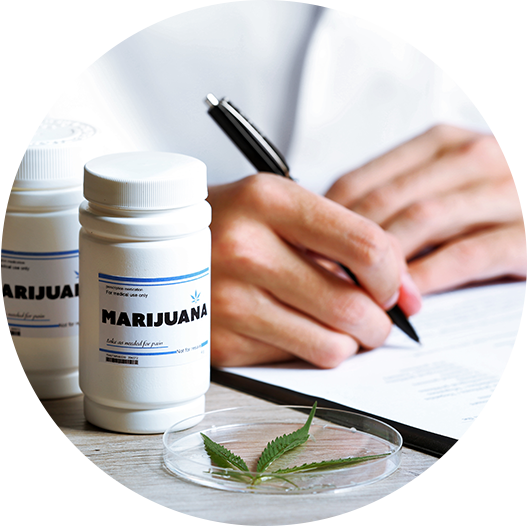
Your California Video Evaluation With Dr. Green Relief
Dr. Green Relief offers video evaluations for a California medical cannabis recommendation for $49. The Medical Board of California says telehealth that complies with Business and Professions Code 2290.5 and the standard of care is permissible (Medical Board guidelines), and the physician must document your consent to a telehealth visit first.
The physician reviews your history, examines you and decides whether to recommend medical cannabis. The visit can give you a recommendation, not a card: the county card is a separate step you take in person, and only your county program takes that application (CDPH FAQ).
California lets only a physician licensed in California who examines you recommend medical cannabis (Business and Professions Code 2525.2), so before your visit you can look up your physician’s California license on the DCA License Search.
| Fee | Amount | Term | Waiver or reduction | Who is paid | Source |
|---|---|---|---|---|---|
| Dr. Green Relief video evaluation | $49 | Per evaluation | None | Dr. Green Relief | Dr. Green Relief price |
| Medical Marijuana Identification Card, application or renewal (optional) | Set by each county, up to $100 | Card valid for one year; renew each year | Medi-Cal beneficiaries pay 50 percent less; waived for County Medical Services Program participants | Your county health department; nonrefundable | HSC 11362.755; form CDPH 9042 |
| State fee (California Department of Public Health) | None | Not applicable | Not applicable | Not applicable | HSC 11362.755 |
| Appeal of a county denial | No cost | File within 30 calendar days | Not applicable | Not applicable | CDPH Forms and Appeals |
| Cannabis excise tax at purchase | 15 percent of gross receipts | October 1, 2025 through June 30, 2029 | None; it applies to medicinal sales | Charged at the retailer | CDTFA |
| Sales and use tax at purchase | Not charged with the card | Each purchase | Exempt only when you show the Medical Marijuana Identification Card and a government ID; a recommendation alone does not qualify | Not applicable | CDTFA |
NOTICE TO CONSUMERS: The Compassionate Use Act of 1996 ensures that seriously ill Californians have the right to obtain and use cannabis for medical purposes where medical use is deemed appropriate and has been recommended by a physician who has determined that the person’s health would benefit from the use of medical cannabis. Recommendations must come from an attending physician as defined in Section 11362.7 of the Health and Safety Code. Cannabis is a Schedule I drug according to the federal Controlled Substances Act. Activity related to cannabis use is subject to federal prosecution, regardless of the protections provided by state law.
California law requires the notice above in its exact words. Since April 28, 2026, federal rules list marijuana in Schedule III only when it is in an FDA-approved product or subject to a state medical marijuana license; all other marijuana remains in Schedule I (91 FR 22714).


SEE A CALIFORNIA ATTENDING PHYSICIAN
Start with an exam by an attending physician. The physician’s license must be in good standing with the Medical Board of California, the Osteopathic Medical Board of California or the California Board of Podiatric Medicine (HSC 11362.7(a)). Recommending cannabis without an appropriate prior examination and a medical indication is unprofessional conduct (BPC 2525.3).

CHOOSE THE OPTIONAL COUNTY CARD
If you want the state card, call your county health department for an appointment and bring form CDPH 9042, a government photo ID, proof that you live in that county and your physician’s documentation (CDPH FAQ). The county must verify your application within 30 days and issue the card within five working days of approving it.

BUY ONLY AT LICENSED RETAILERS
Adults 18 or older may buy medicinal cannabis with a government ID and either a valid recommendation or the county card (BPC 26140(c)(3)). Use the Department of Cannabis Control’s license search to find a licensed retailer, and look for the state license in the store window (What’s legal).
Qualifying Medical Conditions
Cancer
Epilepsy
Glaucoma
Multiple Sclerosis
Parkinson’s Disease
PTSD
AIDS / HIV
Crohn’s Disease
Severe Chronic Or Intractable Pain
Alzheimer’s Disease
California uses two lists. For a recommendation, the Compassionate Use Act names “cancer, anorexia, AIDS, chronic pain, spasticity, glaucoma, arthritis, migraine, or any other illness for which marijuana provides relief” (HSC 11362.5), and the Medical Board says physicians are not limited to those conditions (Medical Board guidelines). For the county card, the law defines a “serious medical condition” as the following (HSC 11362.7(h)):
- Acquired immune deficiency syndrome (AIDS).
- Anorexia.
- Arthritis.
- Cachexia.
- Cancer.
- Chronic pain.
- Glaucoma.
- Migraine.
- Persistent muscle spasms, including, but not limited to, spasms associated with multiple sclerosis.
- Seizures, including, but not limited to, seizures associated with epilepsy.
- Severe nausea.
- Any other chronic or persistent medical symptom that either: (A) Substantially limits the ability of the person to conduct one or more major life activities as defined in the federal Americans with Disabilities Act of 1990 (Public Law 101-336). (B) If not alleviated, may cause serious harm to the patient’s safety or physical or mental health.
Who Can Recommend Medical Cannabis in California
California calls this person the attending physician. The physician’s license must be in good standing with the Medical Board of California, the Osteopathic Medical Board of California or the California Board of Podiatric Medicine, and the physician must have examined you and taken responsibility for an aspect of your care (HSC 11362.7(a)). The Medical Board says a physician treating a patient located in California by telehealth must be licensed in California, though the physician need not live there (Medical Board, Telehealth). A recommending physician may not be employed by, or have any other agreement with, anyone dispensing medical cannabis (BPC 2525.4).
California Medical Card Requirements
Do I need a card to use medical cannabis in California?
No. The Medical Marijuana Identification Card is voluntary, and state law says you do not need one to claim the protections of the Compassionate Use Act (HSC 11362.71(f)). Adults 18 or older with a government ID and a valid physician’s recommendation can buy at licensed retailers. The card adds some things a recommendation does not, such as the sales and use tax rule described under Laws.
Do I have to live in the county to get the card?
Yes. CDPH says you must be a resident of the county where you apply, and the law asks for proof of your residency within the county (CDPH Roles and Responsibilities; HSC 11362.715). Accepted proof includes a current rent or mortgage receipt, a recent utility bill, or a current California vehicle registration in your name at an address in that county (form CDPH 9042).
Can a patient under 18 use medical cannabis in California?
A patient under 18 can hold a county card, but cannot buy at a retailer, because medicinal sales are for buyers 18 or older. A minor who is emancipated or has declared self-sufficiency status may apply alone; otherwise the county must contact a parent, legal guardian or other person with legal authority to make medical decisions (CDPH FAQ). A parent may serve as the primary caregiver.
What should I bring to my visit and to the county office?
- A government photo ID, such as a California DMV driver license or ID card (CDPH FAQ). A patient under 18 without a photo ID may use a certified copy of a birth certificate (HSC 11362.715).
- For the county card: proof that you live in the county, such as a current rent or mortgage receipt, a recent utility bill, or a current California vehicle registration in your name (form CDPH 9042).
- For the county card: your physician’s written documentation; form CDPH 9044 may be used for it, and the form itself says it is not mandatory (form CDPH 9044).
- Any medical records about your condition and a list of the medicines you take.
Records give the attending physician more to go on; they do not mean a recommendation will follow.
What is the difference between a recommendation and a California medical card?
The recommendation comes from your physician and is the part you need; the card is an optional state ID card you apply for at your county (CDPH FAQ). The card shows a unique nine-digit number, its expiration date, your photo and the county program’s name and phone number, and the number can be checked on the CDPH verification website.
Can the California evaluation be done by video?
Yes, when it meets the Medical Board’s rules. The Medical Board of California says telehealth in compliance with Business and Professions Code 2290.5, used in a manner consistent with the standard of care, is permissible (Medical Board guidelines). Before the visit, the provider must tell you about telehealth and document your consent (BPC 2290.5(b)). The physician must hold a California license (Medical Board, Telehealth).
How long does a California recommendation last?
No state law sets a term for the recommendation itself. The Medical Board’s guidelines tell physicians to set a specific duration of no longer than twelve months and to review it at least once a year (Medical Board guidelines). The guidelines also say they are not intended to mandate the standard of care, so check the date and expiration on your own recommendation.
How much does the California medical card cost?
The Medical Marijuana Identification Card is optional. You apply for it in person at your county health department, and the county fee is set by each county, up to $100 per application or renewal for a card that is valid for one year; Medi-Cal beneficiaries pay 50 percent less, and the fee is waived for County Medical Services Program participants. There is no state fee, and the county fee is nonrefundable (form CDPH 9042).
How long is the county card valid?
One year: state law says an identification card “shall be valid for a period of one year” (HSC 11362.745). A caregiver’s card ends when the patient’s card ends. A card is treated as expired if you do not tell the county within seven days about a new physician or caregiver, or do not send updated documentation each year (HSC 11362.76).
How do I renew the county card?
You renew the same way you first applied, in person at your county, with current medical documentation (CDPH FAQ). The same county fee cap of up to $100 applies to a renewal. State sources name no renewal window, grace period or late fee, so contact your county program before the card expires.
Where do I apply for the county card?
At your county health department or its designee. CDPH says the card is available only at your county program, not through your attending physician or an evaluation center (CDPH FAQ). CDPH lists each county’s office, phone number and hours on its County Programs and Business Hours page, and many offices see applicants by appointment only.
Can I apply for the county card without going in person?
No. The county needs to take your photo and complete certain checks in person, CDPH says, although a county may accept an electronic photo at its discretion (CDPH FAQ). A caregiver applies in person with the patient (CDPH Roles and Responsibilities). Only the physician evaluation can take place by video.
How long does the county take?
The county must verify your application within 30 days and issue the card within five working days of approving it (HSC 11362.72). CDPH says a complete application can take up to 35 days to produce a card, and if yours has not arrived by then, contact your county program (CDPH FAQ). A county may also issue a 30-day temporary card in an emergency.
What if the county denies my application?
You can appeal to CDPH at no cost within 30 calendar days (CDPH Forms and Appeals). A county may deny only for missing information you did not supply in time, false information, or not meeting the requirements, and after a denial you may not reapply for six months unless authorized (HSC 11362.74). CDPH says its appeal decisions are final.
Who runs California's medical cannabis card program?
The California Department of Public Health runs the Medical Marijuana Identification Card Program, and each county takes the applications (CDPH MMICP). You can reach the program at [email protected] or (916) 552-8600. Licensed stores are regulated separately by the Department of Cannabis Control, created July 12, 2021.
Does the state keep a list of doctors?
No. CDPH says the state program does not maintain lists of physicians and is not a referral service (CDPH FAQ). When you apply for the county card, the county verifies your physician’s license with the Medical Board of California or the Osteopathic Medical Board of California and contacts the physician (HSC 11362.72).
How many county cards does California issue?
Counties issued 2,925 cards in calendar year 2025 and 2,165 from January through August 2026, according to CDPH’s Monthly Data page. These are cards issued, not active patients: the card is voluntary, so many patients buy with a recommendation alone and never appear in these counts.
Who can be a primary caregiver in California?
A primary caregiver is the person you designate who “has consistently assumed responsibility for the housing, health, or safety” of you (HSC 11362.7(d), (e)). The caregiver must be at least 18, unless the caregiver is the parent of a minor patient or another person allowed to make medical decisions under the Family Code. Serving more than one patient requires living in the same city or county as each of them.
How does a caregiver get a county card?
Through the patient. CDPH says a primary caregiver cannot apply alone: the patient applies for the caregiver’s card, and both of you go in person to the patient’s county program (CDPH FAQ). The caregiver card is part of the county fee, and when the patient is a Medi-Cal beneficiary the caregiver card also costs 50 percent less (CDPH Roles and Responsibilities).
How much medical cannabis can a California patient possess?
A qualified patient or primary caregiver may possess up to eight ounces of dried cannabis per patient and keep up to six mature or 12 immature plants (HSC 11362.77). A patient may have more if the physician recommends it, and cities and counties may set higher limits. Only dried mature processed flowers of the female plant, or the plant conversion, count toward the limit.
Does the county card change the tax I pay?
Yes, for sales and use tax only. CDTFA says medicinal cannabis sold to patients and caregivers who show both a Medical Marijuana Identification Card and a government ID is exempt from sales and use tax; a recommendation without the card does not qualify. The cannabis excise tax of 15 percent still applies to every retail sale.
Where is smoking medical cannabis not allowed?
State law bars smoking medicinal cannabis where smoking is prohibited by law; in or within 1,000 feet of the grounds of a school, recreation center or youth center, unless inside a residence; on a school bus; in a moving motor vehicle; and while operating a boat (HSC 11362.79).
Can my California employer penalize me for using cannabis?
Employers do not have to allow medicinal use at work or during work hours (HSC 11362.785). Since January 1, 2024, an employer may not discriminate in hiring, firing or other terms of work based on your cannabis use off the job and away from the workplace; the law excepts the building and construction trades, federally required testing and federal clearance jobs (Government Code 12954).
Where can I buy medical cannabis in California?
Only at retailers licensed by the Department of Cannabis Control, which you can find with its license search. Licensed retailers display the state license in the window, and you can scan its QR code to check it (What’s legal). Retailers may sell only between 6:00 a.m. and 10:00 p.m. Pacific Time (4 CCR 15403).
Can my city ban medical cannabis delivery?
No. Since January 1, 2024, a city or county may not adopt or enforce a rule that prohibits retail delivery of medicinal cannabis to patients or their primary caregivers within its borders (BPC 26322). Patients may go to court to enforce this right (BPC 26323). Cities and counties may still set other local rules.
How much can a patient buy in one day?
A medicinal patient, or a caregiver buying for the patient, may buy up to 8 ounces of dried flower or the plant conversion and 12 immature plants per day, or the amount in the physician’s recommendation if it differs (4 CCR 15409). The adult use limit is 28.5 grams of non-concentrated cannabis and 8 grams of concentrate per day, and the two sets of limits may not be combined.
Does California accept medical cards from other states?
No. CDPH’s answer is that “California does not recognize other state’s MMIC” (CDPH FAQ), and the state has no visiting patient program. Taking your cannabis across state lines is illegal, even when you travel to a state where cannabis is legal, the California Department of Public Health says (Let’s Talk Cannabis).
Is my county card valid in other California counties?
Yes. CDPH says the Medical Marijuana Identification Card is “a statewide identification card and registry program” (CDPH FAQ), so a card from your home county works across California. Renewal still happens at the county where you live, and each renewal follows the same in-person process as the first application.
Sources:
- Business and Professions Code 2525.2, text read 2026-10-29 from the Legislative Counsel official data (display page linked)
- Department of Consumer Affairs, DCA License Search, linked as named in CONFIRM-NP2; not opened by fetch (bot check)
- California Department of Public Health, Medical Marijuana Identification Card Program, read 2026-10-29
- Business and Professions Code 2525.5, notice to consumers, text re-read 2026-11-05 from the Legislative Counsel official data (CONFIRM-NP2)
- Health and Safety Code 11362.7, definitions, text read 2026-10-29 from the Legislative Counsel official data (display page linked)
- Business and Professions Code 26140(c)(3), who may buy, text read 2026-10-29 from the Legislative Counsel official data (display page linked)
- CDPH, Medical Marijuana Identification Card Program FAQs, read 2026-10-29
- Health and Safety Code 11362.755, county fees, Medi-Cal reduction and waiver, text read 2026-10-29 from the Legislative Counsel official data (display page linked)
- Health and Safety Code 11362.745, one-year card, text read 2026-10-29 from the Legislative Counsel official data (display page linked)
- Health and Safety Code 11362.5, Compassionate Use Act of 1996, text read 2026-10-29 from the Legislative Counsel official data (display page linked)
- Health and Safety Code 11362.71, voluntary card program, text read 2026-10-29 from the Legislative Counsel official data (display page linked)
- Business and Professions Code 2290.5, telehealth, text read 2026-10-29 from the Legislative Counsel official data (display page linked)
- Medical Board of California, Guidelines for the Recommendation of Cannabis for Medical Purposes (April 2018), read 2026-10-29
- Federal Register, 91 FR 22714 (April 28, 2026), register row US marijuana federal schedule, checked 2026-11-04
- CDPH form 9042 (03/26), Medical Marijuana Program Application/Renewal, read 2026-10-29
- CDPH, MMICP Forms and Appeals, read 2026-10-29
- California Department of Tax and Fee Administration, Tax Guide for Cannabis Retailers, read 2026-10-29
- Business and Professions Code 2525.3, text read 2026-10-29 from the Legislative Counsel official data (display page linked)
- Health and Safety Code 11362.72, county processing, text read 2026-10-29 from the Legislative Counsel official data (display page linked)
- Department of Cannabis Control, Cannabis Unified License Search, linked as the regulator’s own finder; the search runs by script and its listings were not read
- Department of Cannabis Control, What’s legal, read 2026-10-29
- California Department of Public Health, What’s Legal (Let’s Talk Cannabis), read 2026-10-29
- Medical Board of California, Telehealth, read 2026-11-05 (CONFIRM-NP2)
- Business and Professions Code 2525.4, text read 2026-10-29 from the Legislative Counsel official data (display page linked)
- Health and Safety Code 11362.715, application contents, text read 2026-10-29 from the Legislative Counsel official data (display page linked)
- CDPH form 9044 (1/2026), Written Documentation of Patient’s Medical Records, read 2026-10-29
- CDPH, MMICP Roles and Responsibilities, read 2026-10-29
- CDPH, MMIC verification website, read 2026-10-29
- Health and Safety Code 11362.76, cardholder duties, text read 2026-10-29 from the Legislative Counsel official data (display page linked)
- CDPH, County Programs and Business Hours, read 2026-10-29
- Health and Safety Code 11362.74, denial and appeal, text read 2026-10-29 from the Legislative Counsel official data (display page linked)
- CDPH, MMICP Monthly Data, read 2026-10-29
- Health and Safety Code 11362.77, possession and plants, text read 2026-10-29 from the Legislative Counsel official data (display page linked)
- Health and Safety Code 11362.79, smoking limits, text read 2026-10-29 from the Legislative Counsel official data (display page linked)
- Health and Safety Code 11362.785, workplace, text read 2026-10-29 from the Legislative Counsel official data (display page linked)
- Government Code 12954, off-the-job use, text read 2026-10-29 from the Legislative Counsel official data (display page linked)
- Department of Cannabis Control, text of regulations, 4 CCR 15403, 15404, 15409, read 2026-10-29
- Business and Professions Code 26322, medicinal delivery access, text read 2026-10-29 from the Legislative Counsel official data (display page linked)
- Business and Professions Code 26323, enforcement by patients, text read 2026-10-29 from the Legislative Counsel official data (display page linked)
Related pages: Medical marijuana card renewal by state | Dr. Green Relief locations
Appointments
"*" indicates required fields
Other State Guides

About
Dr. Green Relief offers medical marijuana evaluations at its Florida and Las Vegas offices, and by telehealth in other states where it serves patients and state law allows it. DR. GREEN RELIEF is a federally registered trademark of Green Medical Marketing LLC. Dr. Green Relief is not affiliated with Dr. Green Relief Rx in Jacksonville or its website drgreenreliefrx.org, and does not authorize them to use its name; see our trademark notice.

Dr. Green Relief
Recent Posts
Recent Posts
- Does Medical Marijuana Affect Blood Clotting or Interact With Blood Thinners?
- What Does a Florida Medical Marijuana Card Cost?
- Medical Marijuana Card Renewal by State
- Which Medical Conditions Qualify in Florida?
- Can Medical Marijuana Help With Migraines and Cluster Headaches? Guide for Florida Patients