Does Medical Marijuana Affect Blood Clotting or Interact With Blood Thinners?
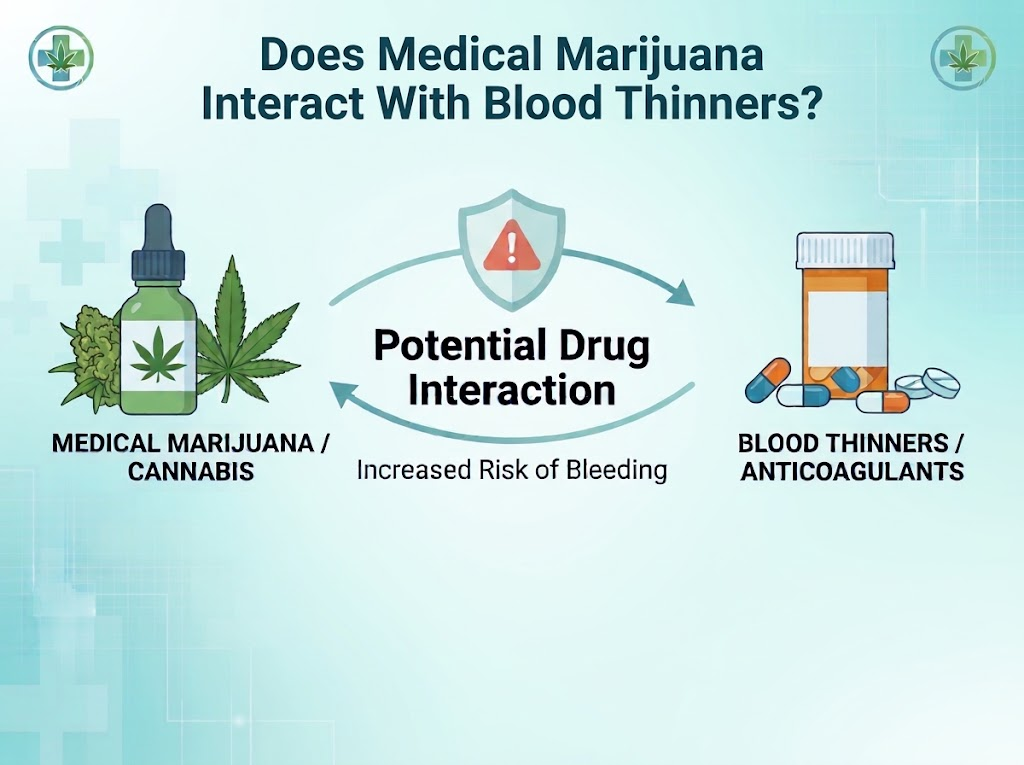
Marijuana is not considered a blood thinner, and it is not used as one. The real concern is interaction. THC and CBD may slow how the liver breaks down some anticoagulant medications, especially warfarin, which may raise bleeding risk. If you take a blood thinner, talk to the doctor who prescribes it before starting medical marijuana.
Key takeaways
- Not a blood thinner. Marijuana is not a recognized blood thinner. Lab and animal studies show some effects on platelets, but not on clotting times.
- Warfarin is the main concern. Most of the human evidence involves warfarin. Several case reports describe raised INR levels after people started cannabis or CBD.
- Newer anticoagulants are largely unstudied. A 2023 systematic review found no published evidence of interactions with newer anticoagulants such as apixaban or rivaroxaban. That gap reflects missing research, not proven safety.
- Antiplatelet drugs may be affected. CBD may interfere with the enzyme that activates clopidogrel (Plavix).
- Medication review comes first. A Florida medical marijuana evaluation includes a review of your full medical history, including current medications.
Is Marijuana a Blood Thinner?
No. Blood thinners fall into two groups:
- Anticoagulant medications slow the clotting process. Examples include warfarin, apixaban (Eliquis), and rivaroxaban (Xarelto).
- Antiplatelet drugs keep platelets from clumping. Examples include aspirin and clopidogrel.
Marijuana does not belong to either group.
So does weed thin your blood? Not in the way these drugs do. In a small 2022 study of 10 rhesus macaques published in the American Journal of Physiology-Cell Physiology, THC reduced platelet aggregation, which is one step in clot formation. However, it did not change how long blood took to clot. This finding does not show that marijuana works like a prescription blood thinner. If you have questions about your own clotting risk, your prescribing physician is the best person to ask.
How THC and CBD May Affect Blood Clotting
The bigger issue is how cannabinoids interact with your medications. THC and CBD are processed by liver enzymes (CYP450), the same enzyme family that breaks down many blood thinners. When two substances compete for the same enzymes, one can build up in the body. This same process explains many other CBD and drug interactions, from seizure medications to heart rhythm drugs.
For warfarin, a buildup can push your INR (a measure of how long blood takes to clot) above the target range. A high INR raises bleeding risk. For a drug like clopidogrel, the effect may run the other way. CBD may block the enzyme that turns clopidogrel into its active form, which could make it less effective.
There is a second, separate concern. A 2024 study in the Journal of the American Heart Association analyzed survey data from about 430,000 adults. Daily cannabis users had 25% higher odds of heart attack and 42% higher odds of stroke than non-users. This matters because many people on blood thinners take them to prevent exactly those events. Cannabis can also change heart rate and blood pressure, so it helps to understand how marijuana affects blood pressure if you are managing heart health.
If you take a blood thinner for heart or stroke prevention, discuss these risks with your prescribing physician before starting medical marijuana.
Medications That May Interact With Medical Marijuana
| Medication type | Possible interaction | Strength of evidence |
| Warfarin (Coumadin) | THC and CBD may slow its breakdown, raising INR and bleeding risk | Human case reports |
| Apixaban, rivaroxaban | Partly processed by the same liver enzymes, so an interaction is possible in theory | No published human evidence |
| Dabigatran, edoxaban | Little or no CYP450 processing | No published human evidence |
| Clopidogrel (Plavix) | CBD may reduce its activation | Based on how the drugs work |
| Aspirin and NSAIDs | Cannabinoids may affect platelets in lab studies | Theoretical |
Warfarin and Other Anticoagulants
Most of the research on CBD and warfarin comes from case reports:
- Grayson et al., 2018. A 44-year-old man on warfarin started prescription CBD (Epidiolex) for epilepsy. His INR rose as the CBD dose increased, and his doctors eventually reduced his warfarin dose by about 30%.
- 2023 systematic review. The review found seven warfarin case reports. INR rose in six of the seven, and four patients needed warfarin dose reductions of 22% to 31%. Doses in those cases were very high or unknown, and the authors rated the overall evidence as very low quality.
- Contrasting 2021 case. Not every patient reacts the same way. A 2021 report described an 85-year-old patient on warfarin who used low-dose oral cannabis drops with no major INR changes.
Because responses vary from person to person, the physician who manages your warfarin and INR should know before you start any cannabis or CBD product.
Antiplatelet Medications and NSAIDs
A 2020 review in the Journal of Clinical Pharmacology flagged the clopidogrel concern. CBD inhibits CYP2C19, the enzyme that activates clopidogrel, which could make the drug less effective and possibly raise stroke risk. Human outcome data are still lacking, though a clinical trial is now testing how CBD affects clopidogrel levels. Because cannabinoids may also affect platelet function, combining cannabis with aspirin or NSAIDs is worth raising with your doctor, especially if you bruise or bleed easily.
Who Should Talk to Their Doctor First
Talk to your doctor before starting medical marijuana if you:
- take warfarin or have regular INR monitoring.
- take apixaban, rivaroxaban, dabigatran, or edoxaban.
- take clopidogrel, daily aspirin, or another antiplatelet drug.
- have a bleeding disorder or a history of serious bleeding.
- have surgery or a dental procedure coming up.
- have heart disease or a prior stroke, or you have had a heart valve replaced.
- take several medications, since drug interaction risk rises with each one.
Florida law requires a qualified physician to complete a physical exam and a full review of your medical history before issuing a certification. Your current medications are part of that review. Bring a complete list, including blood thinners, supplements, and any CBD products you already use.
A medical marijuana physician does not change your blood thinner. That decision stays with your prescribing physician. Patients on warfarin should tell the doctor who manages their INR before they start. Published case reports describe closer INR monitoring when cannabis or CBD is started or the dose changes.
If you are in the Tampa Bay area, a Tampa medical marijuana evaluation includes this medication review. Patients farther south can meet with our Sarasota medical marijuana doctors. For the full process, see our guide to getting a medical marijuana card in Florida.
Frequently Asked Questions
Does weed thin your blood?
Not in the way prescription blood thinners do. Studies show THC may affect platelet function, but marijuana is not considered an anticoagulant. The bigger concern is how it interacts with blood thinner medications.
Is CBD a blood thinner?
No. However, CBD can affect how the body processes warfarin, which is why CBD and warfarin together call for medical oversight. If you are weighing CBD against THC products, see the difference between CBD and marijuana.
Is it safe to combine marijuana and blood thinners?
It depends on which blood thinner you take, the type and dose of cannabis product, and your health history. Your prescribing physician can weigh these factors, along with how closely your levels are monitored, such as regular INR checks for warfarin. Only your doctors can assess your individual risk.
Can I get a Florida medical marijuana card if I take a blood thinner?
Taking a blood thinner does not automatically rule you out. A qualified physician weighs the potential benefits against the risks for your situation.
Should I tell my surgeon I use medical marijuana?
Yes. Tell your surgeon, anesthesiologist, and dentist about any cannabis or CBD use before a procedure. Cannabis may affect platelet function and can interact with anesthesia and other medications, so your care team needs the full picture to plan safely.
The Bottom Line
Is marijuana a blood thinner? No. But it can interact with the medications that are, and warfarin has the most evidence behind that concern. The safest path is a full medication review and honest communication with every doctor involved in your care.
This information is for educational purposes and does not constitute medical or legal advice.