+ Medical Marijuana CardMASSACHUSETTS STEPS,
LIMITS AND FEES
+ Medical Marijuana CardMASSACHUSETTS STEPS,
LIMITS AND FEES
HOW TO GET
A Massachusetts Medical
Marijuana Card
Facts on this page were checked by the Dr. Green Relief editorial team against official sources. Last reviewed November 5, 2026.
The main sources are the Cannabis Control Commission and M.G.L. c. 94I.
To get a Massachusetts medical marijuana card, you need a written certification from a Massachusetts-licensed physician, certified nurse practitioner or physician assistant registered with the Cannabis Control Commission. You then register online with a PIN the provider emails you. Massachusetts charges no fee to register or renew. The card expires each year on your registration anniversary.
Massachusetts Issues Its Card Through the Cannabis Control Commission
Your Massachusetts card is a registration card from the Medical Use of Marijuana Program. The Cannabis Control Commission runs the Program under M.G.L. c. 94I and the rule 935 CMR 501.000, in effect since September 11, 2026. To buy, you need two things active at the same time: the provider’s certification and your registration with the Program, as the Register as a New Patient page explains. St. 2026, c. 65 renamed the treatment centers that serve patients “medical marijuana establishments.”
Your First Massachusetts Visit Can Be Live Video If You Ask
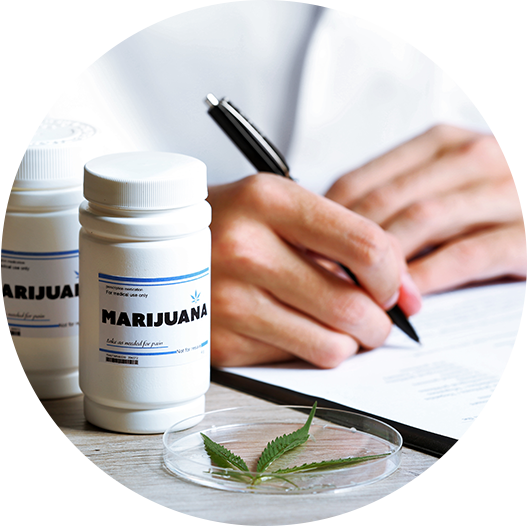
Book a Massachusetts video evaluation with Dr. Green Relief for $159. The $159 evaluation fee is Dr. Green Relief’s; Massachusetts charges no fee to register or renew your patient card.
Under 935 CMR 501.010(8), your first certification visit is in person or, if you ask, by live, real-time video. Renewal visits may be in person or by telehealth. If the provider certifies you, the certification goes into the Commission’s online system and your four-digit PIN arrives by email.
Massachusetts lets a first certification visit take place by live video at your request, but only with a Massachusetts-licensed physician, certified nurse practitioner or physician assistant who is registered with the Cannabis Control Commission and has a place of practice in Massachusetts (935 CMR 501.006 to 501.010), so before your visit, confirm the provider you will see meets those rules.
| Fee | Amount | Term | Waiver or reduction | Who pays | Source |
|---|---|---|---|---|---|
| Dr. Green Relief video evaluation | $159 | Per evaluation | Not listed here | You, to Dr. Green Relief | Dr. Green Relief price list |
| Patient registration with the Program | $0 | Card expires each year on your registration anniversary | None needed | No one | Ten Things New Patients |
| Annual registration renewal | $0 | Each year, up to 60 days before expiry | None needed | No one | Renew as a Patient |
| Replacement card, lost, stolen or destroyed | $10, nonrefundable | Per replacement | Waivable for Verified Financial Hardship: MassHealth, Supplemental Security Income, or income at or under 300% of the federal poverty level | Patient | 935 CMR 501.005(1) and 501.002 |
| Personal caregiver registration and renewal | $0 | Annual | None needed | No one | Register as a New Caregiver |
| Certification visit with any provider | Set by each provider, not the state | Per certification visit | Set by the provider | Patient | New Patient FAQs |
When you register, you attest under 935 CMR 501.840(2)(f): “I understand that nothing in Massachusetts law or the Cannabis Control Commission regulations, 935 CMR 501.000, purports to give immunity under federal law, or poses an obstacle to federal enforcement of federal law.”


SEE A CERTIFYING HEALTHCARE PROVIDER
Start with a visit with a provider registered in the Massachusetts program. The provider reviews your medical history and current condition, and a written certification may only be entered after that visit, as 935 CMR 501.010(8) requires. A patient under 18 needs two certifying physicians.

REGISTER ONLINE WITH YOUR PIN
Your provider emails you a four-digit PIN with instructions. Sign in to the Commission’s online system and enter your details exactly as the instructions show. Then upload a photo ID, proof of Massachusetts residency and, if needed, a photo, as the Register as a New Patient page explains. This step has no state fee.

PRINT A TEMPORARY CARD, THEN WAIT
Once you are approved, print a temporary card from the patient portal; the Commission says the official card should arrive by mail within one to three weeks. While a first application is processed, Initial Access lets a newly certified patient buy for up to 14 days, with a 14-day supply of 2.5 ounces unless the provider certifies otherwise (935 CMR 501.015).
Qualifying Medical Conditions
Cancer
Epilepsy
Glaucoma
Multiple Sclerosis
Parkinson’s Disease
PTSD
AIDS / HIV
Crohn’s Disease
Severe Chronic Or Intractable Pain
Alzheimer’s Disease
Massachusetts uses a named list plus the provider’s written judgment. 935 CMR 501.002 lists the conditions below “when such diseases are debilitating,” and adds “other debilitating conditions as determined in writing by a Qualifying Patient’s healthcare provider.” The same rule defines debilitating as “causing weakness, cachexia, wasting syndrome, intractable pain, or nausea, or impairing strength or ability,” to the point that a major life activity is substantially limited.
- Cancer
- Glaucoma
- Positive status for human immunodeficiency virus (HIV)
- Acquired immune deficiency syndrome (AIDS)
- Hepatitis C
- Amyotrophic lateral sclerosis (ALS)
- Crohn’s disease
- Parkinson’s disease
- Multiple sclerosis (MS)
- Other debilitating conditions as determined in writing by a Qualifying Patient’s healthcare provider
The statute, M.G.L. c. 94I, s. 1, carries the same list.
Who Can Certify You in Massachusetts
Only a Massachusetts-licensed physician, certified nurse practitioner or physician assistant registered with the Commission can certify you. The Commission’s requirements also call for an active license with no prescribing restrictions and a Massachusetts Controlled Substances Registration. The provider must have at least one established place of practice in Massachusetts where a clinical visit can take place (935 CMR 501.006(1) to 501.008(1)). The Commission’s New Patient FAQs tell patients to ask a provider whether they are a Certifying Health Care Provider, so ask that before any visit.
Massachusetts Medical Use of Marijuana Program Requirements
Who qualifies for a Massachusetts medical marijuana card?
You qualify as an adult if you are 18 or older, live in Massachusetts and have been diagnosed by a Certifying Healthcare Provider with a debilitating medical condition, under 935 CMR 501.002. The only residency exception covers non-residents receiving end-of-life or palliative care or cancer treatment in Massachusetts. Your primary residence must be in the state, and the rule does not count dormitories, hotels or shelters as a residence.
Can a patient under 18 be certified in Massachusetts?
Yes, with extra steps set by 935 CMR 501.010(11). Two Massachusetts physicians must certify the patient, and one of them must be a pediatrician, pediatric subspecialist, oncologist, neurologist or family physician. The rule is written for a life-limiting illness; for any other debilitating condition, both physicians must find that the benefits outweigh the risks. A parent or legal guardian must consent and serves as the personal caregiver; the Parent Caregivers page explains the pediatric application, which is now online.
What should I bring to my visit and my Massachusetts application?
- A photo ID the Commission accepts: a current Massachusetts driver’s license or Massachusetts ID card, or a U.S. passport, U.S. military ID or Permanent Resident Card, which needs a second document that proves residency
- Proof of Massachusetts residency whose name and address match your application, such as a utility bill or car insurance bill less than 60 days old (full list on Register as a New Patient)
- A passport-style photo if you are not using a Massachusetts license or ID card
- For the visit: medical records about your condition and a list of the medicines you take now
Your records help the provider assess your condition; they do not decide the certification.
Is medical marijuana legal in Massachusetts?
Yes. M.G.L. c. 94I, s. 2 says a registered patient or personal caregiver “shall not be subject to arrest or prosecution, or civil penalty, for medical use marijuana.” Those protections apply only inside Massachusetts. The Commission’s Know the Laws page also bars medical use in any form, including smoking, vaping or eating, in public places or on federal land.
Does insurance pay for medical marijuana in Massachusetts?
No. The Commission’s New Patient FAQs answer “No” when asked whether purchases are covered by insurance, and c. 94I, s. 6 says insurers are not required to reimburse. Certification visits are a separate cost: the Commission says each certifying provider sets its own fee, so ask for the price before you book anywhere.
Can my Massachusetts certification visit be done by telehealth?
Yes, at your request and within the rule’s limits. 935 CMR 501.010(8) lets a first certification visit take place by telehealth only as a live, real-time, face-to-face encounter between you and the provider, and renewal visits may be in person or by telehealth. The provider must meet the same standard of care and the same licensure and registration rules that apply in person.
How long does a Massachusetts medical marijuana card last?
Your registration card expires each year on the anniversary of your registration, per Ten Things Renewing Patients Should Know. The certification is separate. Under 935 CMR 501.010(9), it lasts 15 days to one year. It can last two years if you receive SSDI or SSI, or if a terminal illness or permanent disability was diagnosed at an in-person visit. Both must be active for you to buy.
When can I renew my Massachusetts registration?
You can renew up to 60 days before your card expires, and the Commission sends an email reminder, per Renew as a Patient. You must hold an active certification before you renew, and the state charges nothing. If your certification has expired, you need a new visit with a certifying provider, who sets the fee, and a new card arrives within 10 to 14 business days of renewal.
What happens if I lose my Massachusetts card?
You request a replacement, which costs $10 under 935 CMR 501.005(1). The fee is nonrefundable. You may ask for a waiver if you have a Verified Financial Hardship: you receive MassHealth or Supplemental Security Income, or your income is at or under 300 percent of the federal poverty level. The Register as a New Patient page gives the program line, (833) 869-6820.
How do I apply after my Massachusetts certification?
You apply online in the Medical Use of Marijuana Program Online System with the four-digit PIN your provider emails you. The New Patient Tutorial walks through each screen: identifying information, attestation, photo ID, proof of residency, photo, then review and submit. Paper forms exist in English, Spanish and Portuguese, but the Commission warns that paper applications take considerably longer.
Which documents prove Massachusetts residency?
Use a document whose name and address match your registration. Examples are a utility bill, car insurance bill or federal or state agency mail less than 60 days old, a current vehicle registration card, or this year’s property or excise tax bill (full list). The Renew as a Patient page says pay statements, doctor or hospital bills, credit card bills and bank statements are not accepted.
Do I need a new PIN every year in Massachusetts?
No. The Commission says the PIN “is only required the first time you register,” per Renew as a Patient. Each renewal still needs an active certification from a Certifying Health Care Provider before the Commission will renew your registration, and you get an email reminder before your card expires.
Who runs the Massachusetts medical marijuana program?
The Cannabis Control Commission runs the Medical Use of Marijuana Program. Its office is at Union Station, 2 Washington Square, Worcester, MA 01604, and its Contact page notes that walk-in visitors cannot be accommodated. The medical program line is (833) 869-6820, open 10 a.m. to 3 p.m., Monday to Friday, and the email is [email protected].
Which laws govern the Massachusetts program?
Three texts govern it: the statute M.G.L. c. 94I, the rule 935 CMR 501.000 effective September 11, 2026, and St. 2026, c. 65, approved April 19, 2026, which amended the statute. Chapter 65 renamed medical marijuana treatment centers “medical marijuana establishments” and ended the requirement that each one grow, process and sell its own product as a condition of its license.
Does Massachusetts publish a list of certifying providers?
We did not find one on the Commission’s pages. Its New Patient FAQs say instead: “Ask your doctor or healthcare provider if they are a Certifying Health Care Provider with the Massachusetts Medical Use of Marijuana Program.” Providers register with the Commission at no fee, and the provider requirements list what each must hold.
Who can be a personal caregiver in Massachusetts?
A personal caregiver must be at least 21, registered with the Commission and not your certifying provider, under c. 94I, s. 1. You may designate up to two personal caregivers (935 CMR 501.020(6)), and the Register as a New Caregiver page says caregiver registration and renewal are free. A caregiver may be reimbursed for reasonable expenses but may not be paid for their time.
How many patients can one Massachusetts caregiver serve?
Up to five registered patients at one time, under 935 CMR 501.020(5). That limit does not apply to a visiting nurse, home health aide, personal care attendant, or an immediate family member of more than one patient. A caregiver who wants to serve more than five patients must seek a waiver from the Commission under 935 CMR 501.850.
Can a Massachusetts caregiver grow for a patient?
Yes, for one patient. Under 935 CMR 501.025(1), a personal caregiver may cultivate for one registered patient who has no Hardship Cultivation Registration, within that patient’s limit of 12 flowering and 12 vegetative plants. The Commission’s Home Cultivation page says plants must be grown in an area with a lock or security device.
How much medical marijuana can I have in Massachusetts?
A 60-day supply, which is 10 ounces unless your certifying provider determines otherwise, under 935 CMR 501.002 and c. 94I, s. 1. A provider who certifies a different amount must document why. Patients certified for 60 days or longer may buy no more than a 60-day supply in each 60-day period.
Can I grow my own medical marijuana in Massachusetts?
Yes. A registered patient may grow up to 12 flowering plants and 12 vegetative plants, not counting clones, under 935 CMR 501.140(3)(c). The Home Cultivation page says plants must be locked and out of public view, and that landlords can legally restrict growing. The Hardship Cultivation Registration for larger grows is, in the Commission’s words, “not yet implemented.”
Can I use medical marijuana in public in Massachusetts?
No. The Commission’s Know the Laws page says you cannot use medical marijuana in any form in public places or on federal land. Under 935 CMR 501.840, nothing requires an employer, school or youth center to allow on-site medical use, and smoking medical marijuana in any public place is not protected. Employers and landlords may also set their own policies.
Where do Massachusetts patients buy medical marijuana?
At licensed medical marijuana treatment centers, which St. 2026, c. 65 now calls medical marijuana establishments. The Commission’s Where to Buy tool filters for medical locations and delivery. Its open-data license file showed 92 active treatment center licenses as of October 22, 2026; each license covers growing, processing and dispensing, so that figure is not a count of storefronts.
What do I show at a Massachusetts dispensary?
Your Program card or temporary card plus a valid photo ID, such as a driver’s license, government ID, military ID or passport, under 935 CMR 501.140. The Commission’s Visiting an MTC page says you pay with cash or a debit card, and credit cards are not accepted. A store must refuse the sale if your certification is not valid in the Commission’s system.
Is medical marijuana taxed in Massachusetts?
No. M.G.L. c. 94I, s. 8 says marijuana sold under the medical chapter “shall not be taxed under chapter 64H, 64I, 64K or 64N.” One cost can still appear at the counter: the New Patient FAQs warn that some debit purchases run as a “cashless ATM” transaction, and your bank or card issuer may charge a fee.
Can I use my Massachusetts card in another state?
Massachusetts says its protections stop at the state line. When you register, you attest that the protections of c. 94I “are applicable only within Massachusetts” (935 CMR 501.015(5)(g)). The Commission’s Know the Laws page adds that it is illegal to drive across state lines with any kind of medical marijuana product, so check the other state’s own rules before you travel.
Can someone who lives outside Massachusetts join the program?
Only in one case. 935 CMR 501.002 lets a non-resident qualify when a Certifying Healthcare Provider determines that the person is receiving end-of-life or palliative care or cancer treatment in Massachusetts. Every other patient needs a primary residence in Massachusetts and a residency document from the list on Register as a New Patient.
Sources:
Official sources, each read October 29, 2026 unless noted:
- 935 CMR 501.000, Medical Use of Marijuana, effective September 11, 2026 (PDF)
- Cannabis Control Commission, Patients and Caregivers
- M.G.L. c. 94I, Medical Use of Marijuana
- Ten Things New Patients Should Know
- Ten Things Renewing Patients Should Know
- Register as a New Patient
- St. 2026, c. 65, An Act Modernizing the Commonwealth’s Cannabis Laws
- Renew as a Patient
- Register as a New Caregiver
- New Patient FAQs
- Certifying Healthcare Provider Requirements, also read November 5, 2026
- M.G.L. c. 94I, section 1 (definitions)
- Parent Caregivers
- M.G.L. c. 94I, section 2 (program and protections)
- Know the Laws
- M.G.L. c. 94I, section 6 (limits)
- New Patient Tutorial
- Contact the Cannabis Control Commission
- Home Cultivation
- Where to Buy
- Open data: medical marijuana treatment center licenses (CSV, updated October 22, 2026)
- Visiting an MTC
- M.G.L. c. 94I, section 8 (no tax on medical sales)
Related pages: medical marijuana card renewal by state and Dr. Green Relief locations.
Appointments
"*" indicates required fields
Other State Guides

About
Dr. Green Relief offers medical marijuana evaluations at its Florida and Las Vegas offices, and by telehealth in other states where it serves patients and state law allows it. DR. GREEN RELIEF is a federally registered trademark of Green Medical Marketing LLC. Dr. Green Relief is not affiliated with Dr. Green Relief Rx in Jacksonville or its website drgreenreliefrx.org, and does not authorize them to use its name; see our trademark notice.

Dr. Green Relief
Recent Posts
Recent Posts
- Does Medical Marijuana Affect Blood Clotting or Interact With Blood Thinners?
- What Does a Florida Medical Marijuana Card Cost?
- Medical Marijuana Card Renewal by State
- Which Medical Conditions Qualify in Florida?
- Can Medical Marijuana Help With Migraines and Cluster Headaches? Guide for Florida Patients