Endocannabinoid System and CB1 and CB2 Receptors
The endocannabinoid system (ECS) is the body’s own network of CB1 and CB2 receptors, signaling molecules and enzymes, and it is where THC and CBD act. Human beings have gone through a strange relationship with cannabis over the years, but it is becoming more accepted in numerous parts of the world, and in the United States, most states had legalized medical cannabis by 2022, and some also allow adult use. In Canada, adult use is legal nationally under the federal Cannabis Act, with provinces setting sales rules. The human endocannabinoid system is a signaling network in the brain and body that cannabis compounds act on, and this is what we’re explaining below.
What is the Endocannabinoid System?
The endocannabinoid system is sometimes shortened to ECS. It is a complex system in the brain and body: the CB1 receptor was identified in 1988 and CB2 in 1993, according to the National Cancer Institute. Whether you use cannabis or not, everyone has an endocannabinoid system.
What Functions Does the Endocannabinoid System Regulate?
There are still studies being done on the ECS and what it does, but it is known to regulate a lot of human functions such as the appetite (explains the famous “munchies”), memory, reproduction, and sleep, as well as the mood. The human endocannabinoid system is important for everyone, not just those who smoke weed.
Other functions that have been shown in studies to be impacted by the system include cardiovascular system function, muscle growth, stress levels, metabolism, learning. The ECS is not fully understood yet, but it touches many of the body’s systems.
What Are the Two Main Receptors Within the ECS?
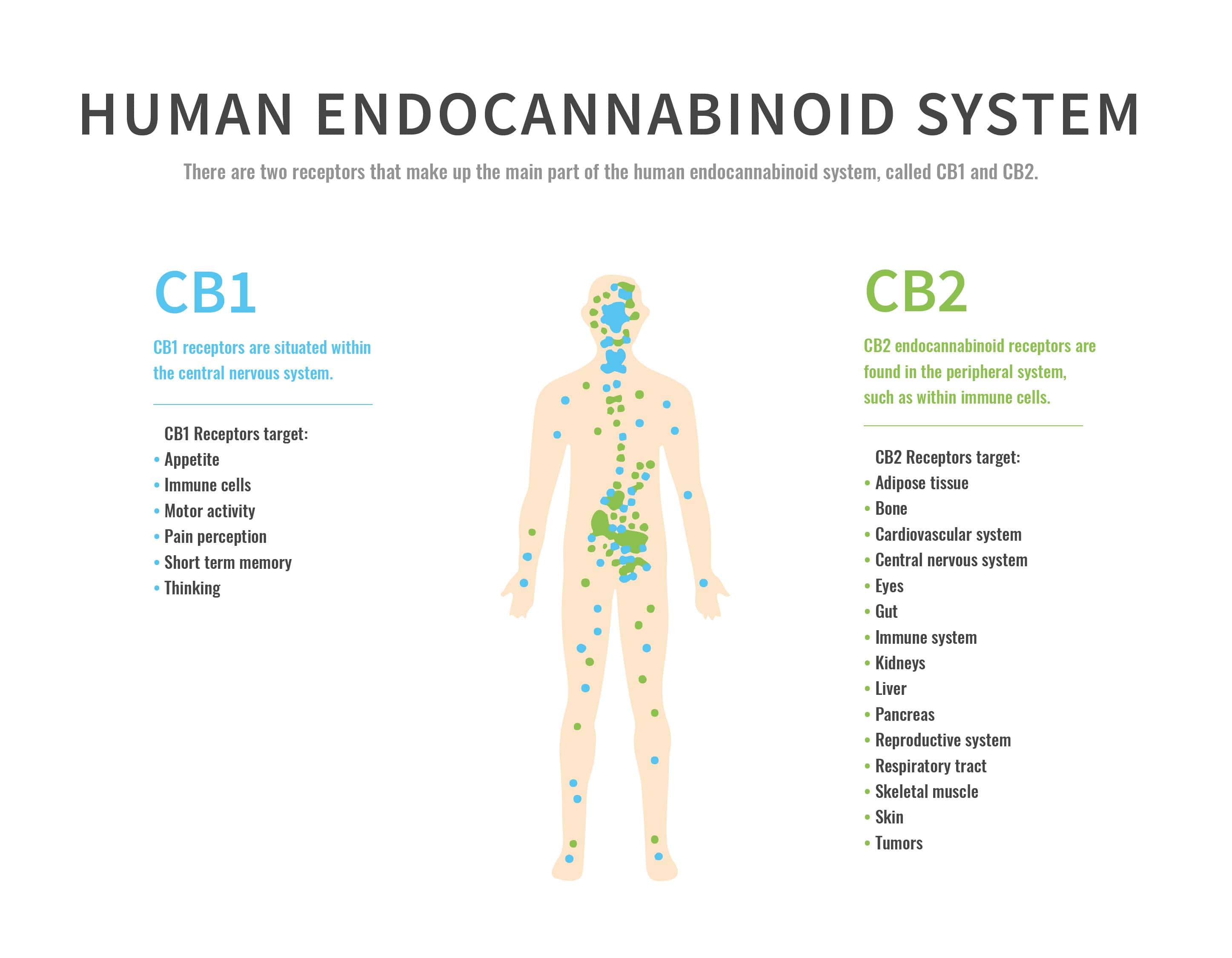
The ECS is made up of endocannabinoid receptors as well as enzymes. There are two receptors that make up the main part of the human endocannabinoid system, called CB1 and CB2. They’re not just found in the brain, they are found within different parts of the body.
Endocannabinoids bind to the endocannabinoid receptors to tell them that action needs to be carried out within the body. An endocannabinoid system diagram can show where the different parts of the body are impacted.
- CB1 receptors are concentrated in the central nervous system but also occur in organs such as the liver and heart.
- CB2 endocannabinoid receptors are found in the peripheral system, such as within immune cells.
The endocannabinoids binding to these different receptors influence different areas. CB1 receptors on nerves help regulate pain signals, and researchers are studying their role in pain and inflammation.
Deficiencies in the Endocannabinoid System
There is a theory that endocannabinoid deficiency in your body can cause certain different conditions to spring up or develop. Researchers have looked at conditions like Fibromyalgia and IBS as well as people who are susceptible to migraines.
The theory, first proposed in 2001, remains a hypothesis: a 2016 review by its author argues newer research supports it, and no cannabis product is FDA-approved for fibromyalgia, IBS or migraine.
THC products and CBD products are very different: THC causes a ‘high’ and CBD does not. CBD is approved as a prescription drug for certain seizures, and hemp-derived CBD is sold in more places than marijuana, though federal hemp rules begin to tighten on November 12, 2026, with THC limits delayed until December 11, 2026. Using either CBD or THC can have a big impact on the Endocannabinoid system, but they don’t work in exactly the same way.
CBD can cause side effects, including liver injury, drug interactions and sleepiness, per FDA, and THC can cause anxiety and impaired memory.
How does CBD interact with the ECS?
Even after some pretty extensive studies, experts aren’t totally certain of the ways that CBD and THC bind with the ECS. They do know that the two don’t work in the same way, though.
CBD is thought to work by preventing endocannabinoids found in the system from being broken down so they have a more profound impact on the body. These endocannabinoids and enzymes may already exist within the body. Some people think that CBD binds to other receptors that still aren’t completely understood.
What we do know is that THC and CBD act on these receptors in different ways: THC acts on CB1 and CB2 directly, while CBD, in lab studies, can block other compounds at those receptors and also reaches other targets.
The endocannabinoid system is still being studied, and it is known to help regulate several body functions. There are plenty of reasons why THC and CBD have become so popular as medicinal products as well as simply being something we can use for a high. CBD does not cause a high, but its FDA-approved medical use is limited to certain seizure disorders, and anti-inflammatory claims come mostly from lab work.