
Marijuana and Arthritis: What the Research Shows
Can marijuana relieve arthritis? The evidence is weak so far: in a 2022 trial of 136 people with hand osteoarthritis or psoriatic arthritis, CBD did no better than placebo for pain, and a 2006 trial of a THC and CBD mouth spray in 58 people with rheumatoid arthritis found small improvements over placebo.
Arthritis is common: CDC says it affects 53.2 million U.S. adults, about 1 in 5. Many people ask whether cannabis can help, and side effects from some standard arthritis medicines are one reason, but the trials we found are few and small.
In Florida, arthritis is not a listed condition, so a qualified physician must find it of the same kind or class as, or comparable to, one of the listed conditions other than a terminal condition or chronic nonmalignant pain before certifying it. Below, we look at what research says about marijuana for arthritis.
What Is Arthritis?
Arthritis, also called joint inflammation, is a term often used for any disorder that affects the joints, and most types can cause joint pain and swelling. It comes in many different forms, and osteoarthritis, the most common type, is more common in older people. Women are more likely than men to have osteoarthritis, especially after age 50, NIAMS says. Our post on marijuana and fibromyalgia covers another condition that causes pain.
Causes and Forms of Arthritis
There are different types. Osteoarthritis risk rises with age, joint injury, extra body weight and some inherited cartilage defects, NIAMS says.
RA or rheumatoid arthritis is an autoimmune disease: the immune system attacks the lining of the joints, causing pain, swelling, stiffness and loss of function. Over time this can damage the tissue that covers the ends of the bones in a joint. Our post on medical marijuana for lupus looks at another autoimmune disease.
Traumatic arthropathy is joint damage that follows an injury, and NIAMS lists joint injury as a risk factor for later osteoarthritis.
Arthritis can leave joints stiff and painful, and some forms can cause lasting joint damage if not treated. Knowing which type you have helps you and your doctor choose a treatment.
How Is Arthritis Usually Treated?
Several standard treatments are used for arthritis, and each has its own trade-offs. Some mainly calm inflammation and others mainly ease pain, and some carry side effects worth discussing with your doctor.
Pain relievers such as acetaminophen and anti-inflammatory drugs such as ibuprofen are common choices. Follow the label: NSAIDs can cause stomach bleeding, and those other than aspirin can raise heart attack and stroke risk.

Creams, rubs or sprays applied to the skin over sore joints are another option for osteoarthritis pain, NIAMS says. Corticosteroids may also be used, often injected into the joint for osteoarthritis, and for rheumatoid arthritis doctors also prescribe disease-modifying antirheumatic drugs (DMARDs). For rheumatoid arthritis, NIAMS says corticosteroids can decrease inflammation, ease some pain and slow joint damage.
Cannabis products come as flower, edibles, oils and topical gels, and the next section covers what a 2022 CBD trial and an earlier spray trial found.
Treatment plans differ with the type of arthritis. Treatment usually aims to manage pain and, for rheumatoid arthritis, to control the disease so it is in remission or near remission, NIAMS says. Speak to your doctor about which options fit your type of arthritis and your other medicines.
Can Cannabis Help Arthritis? What Trials Show
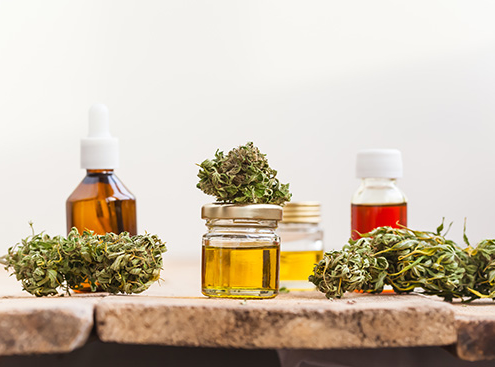
Two placebo-controlled trials are the best evidence we found. A 2022 trial of CBD and a 2006 trial of a THC and CBD mouth spray do not show that either treats the root causes of arthritis, and relief in studies has been small or absent.
In a 2006 randomized trial of 58 people with rheumatoid arthritis, a THC and CBD mouth spray eased pain slightly more than placebo over 5 weeks. The trials we found do not show that cannabis works better, or with fewer side effects, than standard arthritis drugs.
Rules differ by state. In Florida, only a qualified physician, an MD or DO who has completed the state’s required course and exam, can certify a patient.
Pain, Inflammation and Sleep: What People Ask About
Questions people ask about cannabis for rheumatoid arthritis and other types of arthritis include:
What Do Studies Show for Arthritis Pain?
Pain is one of the main reasons people look at medical marijuana. In the arthritis trials above, CBD did no better than placebo for pain and the spray eased it slightly more than placebo; for chronic pain in general, NIH describes the benefit as small, possibly too small to matter to many patients.
What About Joint Inflammation?
Joint inflammation findings are mixed. In the 2006 rheumatoid arthritis trial the spray modestly lowered a disease activity score but did not change morning stiffness, and the 2022 CBD trial, whose main measure was pain, found no benefit.
What About Sleep?
Arthritis pain can also get in the way of sleep. People with traumatic arthropathy or other forms such as RA and OA may have trouble getting to sleep because of pain or because it is hard to get comfortable; in the 2006 rheumatoid arthritis spray trial, sleep quality improved a little more than on placebo, while the 2022 CBD trial found no effect on sleep quality. Some people say it helps them sleep, though NIH says that may come from less pain.
Nobody should tell you cannabis is a cure: it does not take arthritis away. Some people say it helps, but in trials side effects were more common on cannabinoids than on placebo.
If you’re weighing cannabis for arthritis in Florida, start with a qualified physician. The physician at our Sarasota office can evaluate whether your arthritis meets Florida’s test: a condition of the same kind or class as, or comparable to, one of the listed conditions other than a terminal condition or chronic nonmalignant pain; that decision is at the physician’s discretion, and certification is never promised. Keep your rheumatologist or primary doctor involved, since CBD can change how other medicines work and cannabis does not replace arthritis treatment.
Last updated October 17, 2026 by the Dr. Green Relief Editorial Team.
Medical review
Medically reviewed by Achilles Kalnoky, M.D.
Reviewed on .
He is licensed in Florida as a medical doctor, license ME115088, which you can check on the Florida Department of Health license lookup.
His review covers the medical statements in this post and the sources cited for them.
Sources
- Vela, et al. Cannabidiol treatment in hand osteoarthritis and psoriatic arthritis: a randomized, double-blind, placebo-controlled trial. Pain. 2022
- Blake, et al. Preliminary assessment of the efficacy, tolerability and safety of a cannabis-based medicine (Sativex) in the treatment of pain caused by rheumatoid arthritis. Rheumatology (Oxford). 2006
- CDC. Chronic Disease Facts and Stats
- National Center for Complementary and Integrative Health. Cannabis (Marijuana) and Cannabinoids: What You Need To Know
- Florida Statutes s. 381.986 (2026). Medical use of marijuana
- National Institute of Arthritis and Musculoskeletal and Skin Diseases. Osteoarthritis
- National Institute of Arthritis and Musculoskeletal and Skin Diseases. Rheumatoid Arthritis
- MedlinePlus. Acetaminophen
- MedlinePlus. Ibuprofen
- National Institute of Arthritis and Musculoskeletal and Skin Diseases. Osteoarthritis: Diagnosis, Treatment, and Steps to Take
- National Institute of Arthritis and Musculoskeletal and Skin Diseases. Rheumatoid Arthritis: Diagnosis, Treatment, and Steps to Take
- FDA. What You Need to Know (And What We’re Working to Find Out) About Products Containing Cannabis or Cannabis-derived Compounds, Including CBD
- MedlinePlus. Arthritis



