How to Explain CBD vs. Marijuana Difference to Patients
Is CBD the same as marijuana? No, though many patients assume a CBD product bought at a gas station is medical marijuana, and that confusion has real consequences for how care gets delivered.
The CBD vs. marijuana difference comes down to THC and the law: hemp CBD has no more than 0.3% delta-9 THC under current federal law and needs no card, while marijuana causes a high, is still federally controlled, and in Florida requires a physician certification. What each term actually means, where the compounds come from, and how to explain both clearly to patients with no scientific background are covered below.
What Is CBD?
CBD, short for cannabidiol, is one of more than 100 cannabinoids found in cannabis plants. Unlike THC, it does not produce a high or cause the intoxicating effects patients typically associate with marijuana.
CBD interacts with the body’s endocannabinoid system, but without binding directly to CB1 receptors the way THC does. That difference in receptor activity is largely why CBD does not alter perception or cause impairment.
It is available in many forms, including oils, capsules, creams, and edibles. Hemp-derived CBD comes from plants that, under the Agriculture Improvement Act of 2018 (2018 Farm Bill), contain at most 0.3% delta-9 THC on a dry-weight basis and are no longer federally controlled; a narrower federal hemp definition starts November 12, 2026, and its THC limits are delayed until December 11, 2026.
What Is Marijuana?
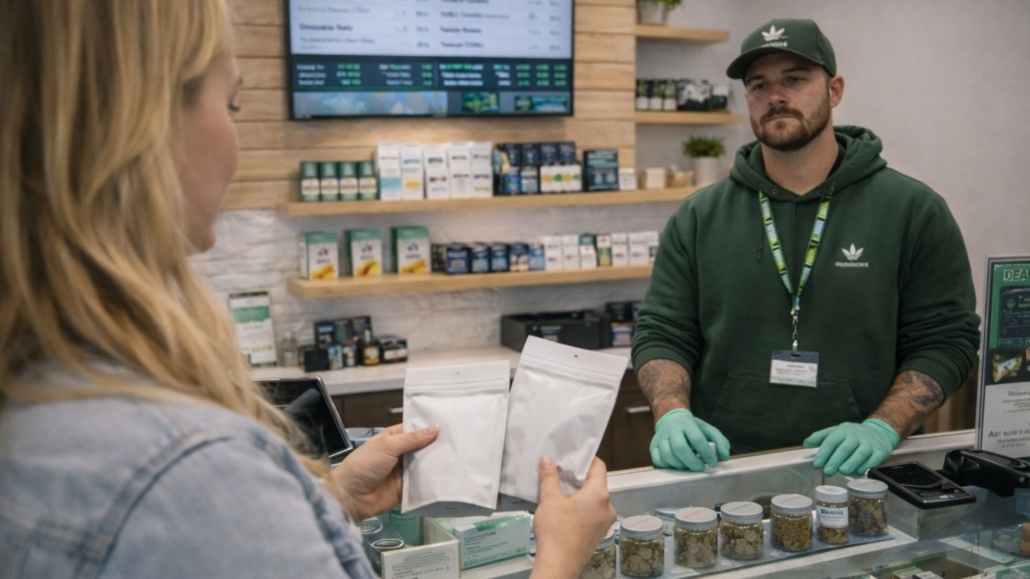
Marijuana refers to cannabis plant varieties cultivated for their THC content. THC, or tetrahydrocannabinol, is the marijuana psychoactive compound responsible for euphoria, altered perception, and other intoxicating effects.
Medically, marijuana is used under state-licensed programs. Florida, for example, runs its program through the Office of Medical Marijuana Use (OMMU). The 2024 Florida recreational marijuana amendment failed: it won 55.9% of the vote when 60% was needed, so adult-use marijuana is not legal in Florida.
Patients certified by a qualified physician and approved for a registry ID card can buy products such as flower, oils, tinctures, capsules and edibles from licensed treatment centers under the legal requirements for medical marijuana in Florida.
Marijuana-derived products contain a broader range of cannabinoids and typically far higher THC concentrations than anything found in hemp-derived CBD.
CBD vs. Marijuana Difference
This table gives patients and providers a clear side-by-side view of the core distinctions:
Hemp-derived CBD is in the middle column and marijuana on the right.
| Feature | CBD (Hemp-Derived) | Marijuana |
| Primary compound | Cannabidiol (CBD) | THC + multiple cannabinoids |
| THC content | 0.3% or less (by law) | Varies; often 10%+ |
| Psychoactive effect | None | Yes (from THC) |
| Legal status (federal) | Not federally controlled if it meets the hemp definition (narrower from Nov. 12, 2026; THC limits delayed until Dec. 11, 2026) | Schedule III if subject to a state medical marijuana license, otherwise Schedule I, and still federally controlled; medical laws in 38 states and DC (2022 count) |
| Requires a doctor’s certification | No | Yes (for state medical programs) |
| Available without a Florida medical card | Yes (21+ for ingestible or inhalable hemp extract) | No |
| Sold at | Health stores, online, pharmacies | Licensed dispensaries only |
| Common forms | Oil, capsule, cream, gummy | Flower, oil, tincture, edible, vape |
| Used for | Not FDA-approved for any use except as prescription Epidiolex | State-qualifying medical conditions |
| Drug test risk | Low (but possible trace amounts) | High |
The CBD vs. marijuana difference at the legal and clinical level comes down to source plant, THC concentration, and access pathway. Hemp-derived CBD products require no state program enrollment. In Florida, marijuana requires a physician certification and state registry approval.
Difference Between Pure CBD From Marijuana vs Hemp
This is where much of the confusion begins. Marijuana and hemp both belong to the same cannabis species and can both produce CBD. The difference between pure CBD from marijuana vs hemp, however, is significant at the regulatory and practical level.
Hemp-derived CBD comes from plants with no more than 0.3% delta-9 THC by dry weight under current federal law. The CBD is extracted, and the trace THC remaining is minimal or removed entirely. These products are not federally controlled substances under today’s hemp definition.
Marijuana-derived CBD comes from high-THC cannabis plants. Even if the final product is refined to contain mostly CBD, it is still legally classified as a marijuana derivative and falls under state medical program rules. To buy it from a licensed treatment center in Florida, a patient needs a physician certification and an approved registry ID card.
When a patient says they are already “using CBD,” providers should ask where it came from. A hemp product from a health food store and a CBD tincture from a state dispensary are not the same product under the law, even if the label says “CBD.”
For patients asking about conditions like ADHD, the evidence matters more than the source: the research on medical marijuana benefits for ADHD is limited, and a 2017 trial in 30 adults missed its main goal.
Why Patients Often Confuse CBD and Marijuana
The terminology in this industry is genuinely inconsistent. Patients encounter product labels, social media content, and news coverage that use “CBD,” “cannabis,” “hemp,” and “marijuana” interchangeably when they are not the same thing.
Several factors drive the confusion:
- The word “cannabis” applies to both hemp and marijuana, so products labeled “cannabis oil” could legally be either.
- “Hemp oil” and “hemp seed oil” are often confused, though hemp seed oil contains almost no CBD at all.
- CBD products are sold everywhere from pharmacies to gas stations with minimal regulation, while dispensary products are tightly controlled.
- Patients who have tried hemp-derived CBD and felt little effect sometimes conclude that “marijuana doesn’t work,” not realizing they were using a fundamentally different product.
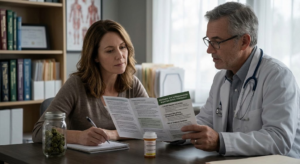
Patient education at the point of care helps close this gap, so patients know which product their certification covers.
How Healthcare Providers Can Explain the Difference to Patients
Simple analogies work better than technical explanations. Here are a few that work well in practice:
- Decaf coffee analogy. Hemp is like decaf coffee: same plant, similar smell, but without the compound that produces the effect. Marijuana is the full-strength version.
- Separate the plant from the product. Both CBD and THC come from the cannabis plant, but they are different compounds with different effects, different legal statuses, and different clinical applications.
- Clarify the “getting high” question directly. Many patients want the medical benefits of cannabis without intoxication. That is a reasonable goal, and it is worth explaining that some medical marijuana products are low in THC and high in CBD, designed exactly for that profile. A visit with Florida medical marijuana doctors is the right place to have that conversation about product selection.
- Address the drug test concern. Patients worried about employment drug testing should know that hemp-derived CBD can occasionally trigger a positive result due to trace THC, and that marijuana-derived products carry a significantly higher risk.
- Use the comparison table as a handout. The table in this article is designed to be plain enough to share or reference during a visit. A printed table gives patients something to take home and check later.
For patients interested in pursuing a medical cannabis certification, directing them to schedule a medical marijuana consultation is the appropriate next step.
Safety Considerations When Discussing CBD With Patients
CBD is generally considered well-tolerated, but it is not without risk, and providers should address this directly rather than letting patients assume it is consequence-free.
Drug interactions are real. CBD inhibits CYP450 liver enzymes, which affects how the body metabolizes many common medications, including the seizure drug clobazam, whose active metabolite the Epidiolex label says CBD raises, and antidepressants such as sertraline and citalopram, per a 2021 review. Patients on complex medication regimens should discuss CBD use with their prescribing provider before starting.
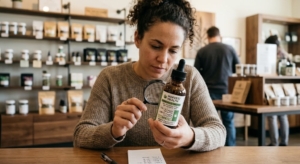
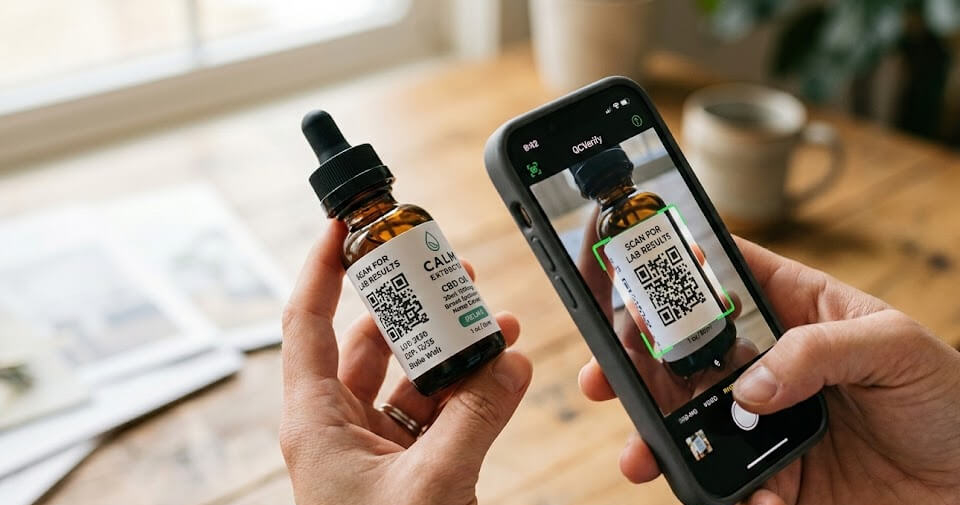
Product quality is inconsistent. Retail hemp CBD rules vary by state; Florida requires an independent lab certificate of analysis, but CBD products are not FDA-approved. Third-party lab testing (COA documentation) is the only way to verify what is actually in a product. Many patients are not aware this exists.
It is not equivalent to a medical marijuana treatment plan. Patients using CBD oil from a health store are not receiving the same quality control, dosing guidance, or clinical oversight that comes with a state-licensed medical cannabis program. For patients with a documented qualifying condition, a physician certification adds medical oversight and products the state requires to be lab tested.