CBD vs THC: What’s the Difference and Which One Is Right for You?
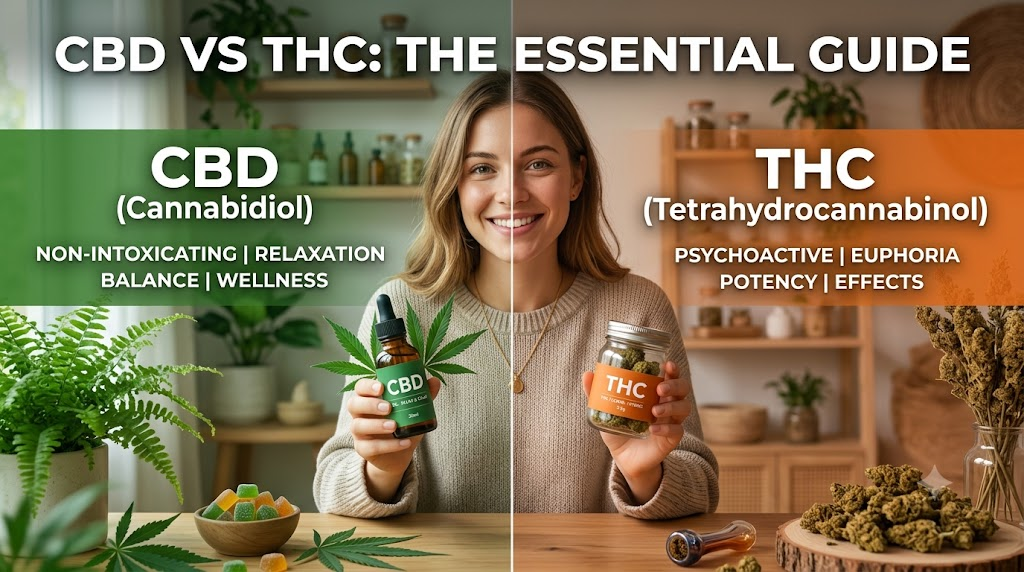
If you’re researching medical marijuana for the first time, the terms CBD and THC probably come up in the first five minutes. They’re the two most talked-about compounds in the cannabis plant, and while they’re chemically similar, they behave very differently once they’re in your body. Knowing the difference between THC and CBD helps you have a more informed conversation with a physician and understand what to expect from a certification.
This guide breaks down what each compound does, how they compare side by side, and where CBD and THC fit into a medical marijuana program.
What Is THC?
THC, or tetrahydrocannabinol, is the compound in cannabis responsible for the “high” most people associate with marijuana. It works by binding directly to CB1 receptors in the brain, which is what produces the intoxicating effect. Patients pursuing a medical marijuana card often encounter THC in flower, vape products, edibles, and tinctures available through licensed dispensaries.
THC is also the compound most closely tied to symptom relief for conditions like chronic pain, nausea, and muscle spasms, though individual response varies and a physician should guide product choice and dosage.
What Is CBD?
CBD, or cannabidiol, comes from the same plant but doesn’t produce a high. It interacts with the body’s endocannabinoid system in a more indirect way, which is part of why it’s associated with a calmer, non-intoxicating experience. CBD also has a real clinical track record: the FDA has approved a prescription CBD medication for certain rare seizure disorders, one of the clearest signs that the compound has legitimate therapeutic activity in the body. That approval, however, doesn’t extend to other uses like anxiety or general pain.
Many patients start their research with CBD because it’s easier to access, but some find that a doctor-guided combination of CBD and THC, or a low-dose THC product, provides more effective relief for their specific condition.
CBD vs THC: Side-by-Side Comparison
Here’s how the two compounds compare across the factors patients ask about most:
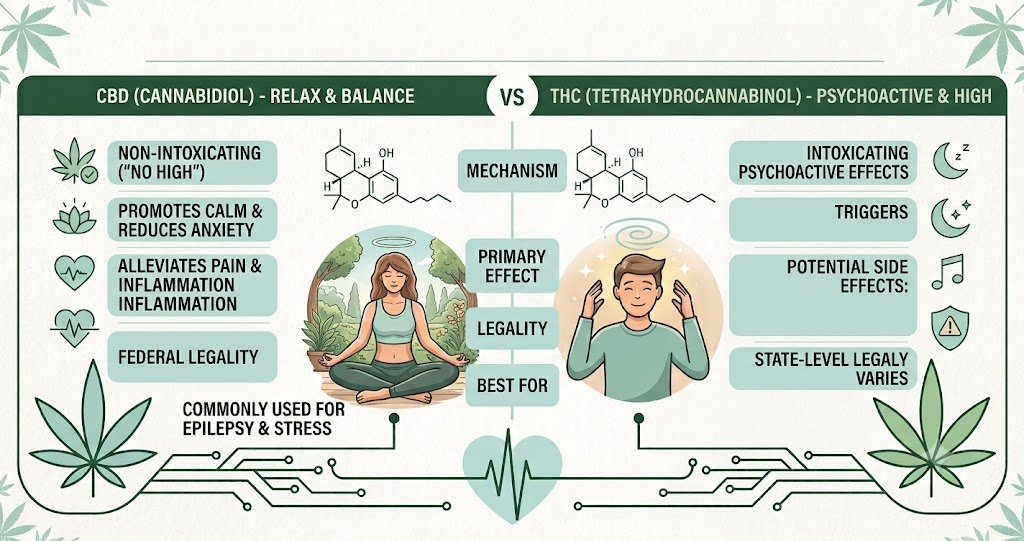
| THC | CBD | |
| Psychoactive | Yes, produces a “high” | No intoxicating effect |
| Primary receptor | Binds directly to CB1 receptors | Works indirectly on the endocannabinoid system |
| Legal status | Restricted; available through state medical programs or licensed dispensaries | Hemp-derived CBD is federally legal; higher-THC CBD products fall under state cannabis law |
| Common use | Pain, nausea, muscle spasms, appetite | Anxiety, sleep support, general wellness |
| Drug test impact | Can show up on standard drug screens | Low risk if THC content stays under 0.3%, but not zero |
| Where it’s found | Flower, vapes, edibles, tinctures | Oils, capsules, topicals, some flower strains |
The short answer to “what is the difference between THC and CBD” comes down to this: THC gets you high and is more tightly regulated, while CBD does not get you high and is more widely accessible. Everything else, from legal status to how each is used, follows from that core difference.
CBD vs THC for Anxiety
CBD is generally the better-tolerated option for anxiety because it doesn’t carry the intoxicating effects that can sometimes make anxiety feel worse for some people. THC’s relationship with anxiety is more complicated: clinical research has found that low doses can have a calming, stress-relieving effect, while higher doses of THC have been shown to increase negative mood or anxiety symptoms in some people rather than relieve them.
This dose-dependent pattern is exactly why self-experimenting with THC for anxiety can backfire, and why working with a physician on dosing matters more here than with almost any other symptom. There’s no one-size-fits-all answer. Response to cannabinoids varies significantly from person to person, and this is the kind of decision a certified physician should walk through with you, factoring in your specific symptoms, other medications, and prior experience with cannabis products.
Which One Should You Start With?
There isn’t a universal answer, and this is where working with a physician matters more than following general advice online. A few things typically shape the decision:
- Sensitivity to THC. If you’ve never used cannabis or are sensitive to psychoactive effects, a CBD-forward or low-THC approach is usually the more comfortable starting point.
- The condition being treated. Some symptoms respond better to THC’s direct effects, while others are better managed with CBD alone or a balanced ratio.
- Daily responsibilities. THC’s psychoactive effects can affect driving and work, which matters for dosing and timing decisions.
- State law. What’s legally available to you depends heavily on where you live and whether you’re enrolled in a state medical marijuana program.
CBD, THC, and the Medical Marijuana Certification Process
Once you’re approved through a state medical marijuana program, you’ll typically have access to a wider range of THC and CBD products than what’s available over the counter, along with guidance on ratios and dosing from a licensed physician. This is one of the main advantages of going through a formal certification rather than relying on unregulated hemp products alone.
If you’re in Florida and ready to move forward, getting a Florida medical marijuana card involves a certification process, required documentation, and an appointment with a licensed physician, all of which are covered in more detail here.
Patients in the Tampa area can also start that process directly with our Tampa medical marijuana doctors, and the same applies for patients near Fort Myers or Sarasota, where our physicians can evaluate your qualifying condition and talk through whether a CBD-forward, THC-forward, or balanced approach makes sense for you.
FAQs
Is CBD or THC better for pain?
Both are used for pain management, but they work differently. THC tends to provide more direct relief for certain types of pain, including nerve pain and muscle-related discomfort, because of how it interacts with pain receptors, while CBD is often used alongside THC to help balance side effects like anxiety or grogginess. The right combination depends on the type and severity of pain, which is best assessed by a physician.
Does CBD show up on a drug test?
Pure CBD products generally carry low risk, but many CBD products contain trace amounts of THC that could potentially be detected on a sensitive drug test. If drug testing is a concern, this is worth discussing directly with your physician before starting any product.
Can you take CBD and THC together?
Yes, many patients use both, often in ratios their physician recommends based on their condition and tolerance. CBD is sometimes used to soften THC’s psychoactive effects, which is one reason balanced-ratio products are common in medical marijuana programs rather than single-compound options. If you want to go deeper on how these ratios work, our guide to THC and CBD ratios breaks down what to expect at different combinations.
Is THC legal everywhere CBD is legal?
No. Hemp-derived CBD with less than 0.3% THC is federally legal, but THC remains far more restricted and is generally only available through state medical marijuana programs or, in some states, licensed adult-use dispensaries.