How to Read a Cannabis Product Label: THC, CBD, Dosage & Safety Explained
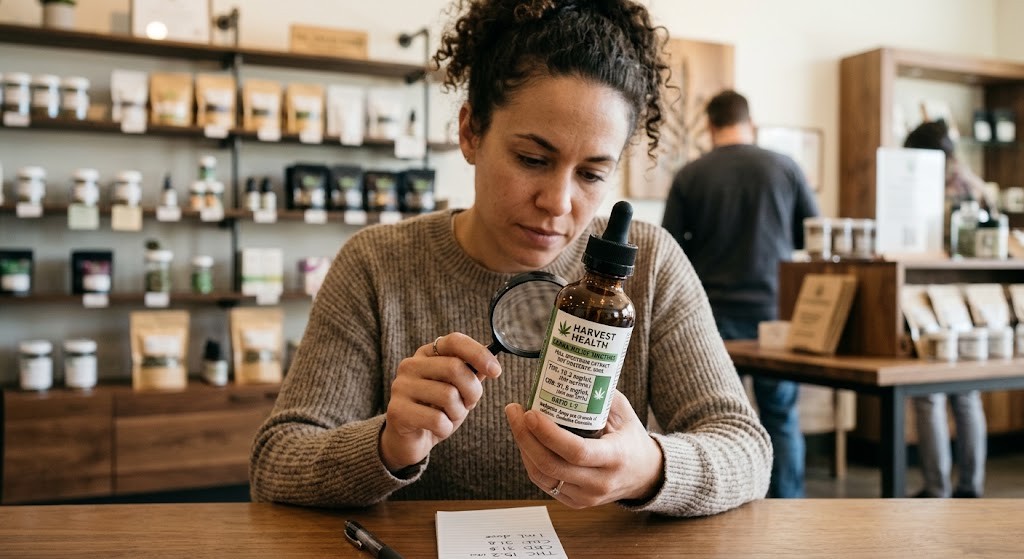
Cannabis product labels pack a lot of information into a small space, and most of it looks like a foreign language the first time you see it. THC percentages, CBD milligrams, batch numbers, terpene panels, warning icons. If you don’t know what you’re looking at, it’s easy to grab the wrong product or take too much on your first try. Breaking down each section makes it much easier to know exactly what you’re buying before you buy it.
Whether you’re picking up flower, edibles, tinctures, or vape products, the label is your best source of truth. The information on it is tested, verified, and legally required in every regulated market. Once you know how to read it, choosing the right product gets a lot less confusing.
If you’re new to medical cannabis altogether, physicians can walk you through your first purchase after your evaluation with our Tampa medical marijuana doctors, who explain label basics as part of every new patient visit.
What Information Is Required on a Cannabis Product Label?
Every legal cannabis product sold at a licensed dispensary must display lab-tested results and safety information on its label. This is not optional. State regulators require it so patients know exactly what they’re consuming.
Most cannabis product labels include the following sections:
- Cannabinoid potency: THC, CBD, and sometimes minor cannabinoids like CBN, CBG, or THCV, shown as a percentage or in milligrams.
- Serving size and dosage: How much of the product equals one dose, and how many doses are in the package.
- Batch and lab testing information: A batch number tied to a certificate of analysis from a licensed testing lab.
- Harvest or packaging date: When the flower was harvested or the product was manufactured.
- Ingredients: Especially important for edibles, tinctures, and infused products.
- Warning statements: Required safety language about intoxication, pregnancy, and driving.
Not every state requires the exact same fields, and some dispensaries add extra detail beyond the legal minimum. If a product is missing lab testing information entirely, that’s a red flag worth asking your budtender or physician about.
What Does THC Percentage Mean on a Label?
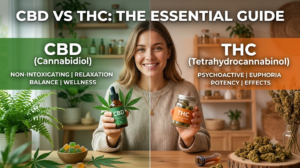
THC percentage tells you how much tetrahydrocannabinol, the compound responsible for cannabis’s intoxicating effects, is present in the product by weight. A higher percentage generally means a stronger psychoactive effect, though how a product actually feels depends on more than the number on the label.
Flower and concentrate labels typically show THC as a percentage. Edibles and tinctures usually show it in milligrams per serving instead, since those products are precisely dosed rather than sold by weight.
Here’s a general breakdown of what THC percentages tend to mean in practice:
| THC Percentage | General Category |
| 5% to 15% | Lower potency |
| 15% to 25% | Moderate potency |
| 25% to 35% | Higher potency |
| 35%+ (concentrates) | Very high potency |
These ranges are a starting point, not a hard rule. Two flower products with identical THC percentages can feel different depending on the strain, the terpene profile, and your own tolerance.
What Is THCA and Why Does It Matter?
THCA, or tetrahydrocannabinolic acid, is the non-intoxicating compound naturally present in raw cannabis flower before it’s heated. When a flower is smoked, vaped, or cooked, THCA converts into active THC through a process called decarboxylation. Some labels list THCA and THC separately, while others combine them into a single “Total THC” figure.
If a label only shows a THCA percentage with little or no listed THC, that flower will still produce a strong psychoactive effect once heated. Don’t assume a high THCA number means a mild product. It usually means the opposite.
How Is CBD Content Listed on a Product Label?
CBD, or cannabidiol, appears on labels the same way THC does, either as a percentage for flower and concentrates or in milligrams for edibles and tinctures. Unlike THC, CBD does not produce a high, and many patients look for it specifically because of that.
Products with high CBD and low THC tend to produce more physical, body-focused effects with minimal intoxication. Balanced ratio products, where CBD and THC appear in roughly equal amounts, are often recommended for patients who want symptom relief without a strong psychoactive effect. If you’re comparing options, understanding THC to CBD ratios can help you see which ratios tend to work best for different goals, from pain management to sleep support.
How Do You Read Dosage Information on Edibles and Tinctures?
Dosage information on edibles and tinctures tells you exactly how much THC or CBD is in a single serving, separate from how much is in the entire package. This distinction matters more than almost anything else on the label, especially for new patients.
Here’s what typically appears in the dosage section:
- Milligrams per serving: The amount of THC or CBD in one piece, one dropper, or one dose.
- Milligrams per package: The total amount across the entire product, which may contain multiple servings.
- Recommended starting dose: Guidance for new users, often suggesting a low amount and a waiting period before taking more.
A package of 10 gummies might list 100 mg of THC total, with 10 mg in each gummy. Eating the whole package is not the same as eating one gummy, even though both numbers appear on the same label.
Edibles also take longer to produce effects than smoked or vaped products, often 30 to 90 minutes, so waiting before taking more is one of the most important safety habits a new patient can build.
How Much THC Should a Beginner Start With?
A reasonable starting point for most new patients is 2.5 mg to 5 mg of THC, particularly with edibles. This lower range reduces the chance of an uncomfortable experience while your body adjusts to how cannabis affects you. Your physician can help you determine the right starting dose based on your condition, tolerance, and any medications you’re taking, which is exactly what happens during a certification visit with Fort Myers marijuana doctors at Dr. Green Relief.
What Are Terpenes and Why Are They on the Label?
Terpenes are the aromatic compounds responsible for cannabis’s smell and flavor, and many labels now include a terpene panel alongside cannabinoid content. Terpenes don’t get you high, but research suggests they may influence how a product’s effects feel, working alongside THC and CBD rather than independently.
Common terpenes you’ll see listed include myrcene, limonene, and pinene, each associated with a different scent and, anecdotally, a different feel. Two products with nearly identical THC percentages can feel noticeably different if their terpene profiles vary. If terpene content is missing entirely, it usually just means the product wasn’t tested for it, not that anything is wrong with the batch.
What Do Batch Numbers and Testing Dates Mean?
A batch number links a specific product to its certificate of analysis, the official lab report confirming its cannabinoid content, potency, and safety. Every legal product should be traceable to a batch that was tested by a licensed, independent lab before it reached the shelf.
Testing typically screens for:
- Cannabinoid potency: Confirming the THC and CBD percentages actually match the label.
- Pesticides and heavy metals: Screening for contaminants that could be harmful if consumed.
- Microbial contaminants: Checking for mold, yeast, and bacteria, especially important for flower.
- Residual solvents: Relevant for concentrates made using extraction processes.
If a dispensary can’t provide a certificate of analysis for a product you’re interested in, that’s worth asking about before you buy. Reputable dispensaries make this information easy to find, either printed on the label or available on request.
Why Do Cannabis Labels Look Different From State to State?
Cannabis labeling requirements are set at the state level, which means what appears on a label in one state may not match what you see in another, even for a similar type of product. Serving size limits, required warning language, and even how THC is displayed can all vary by state program.
This is one reason it’s worth checking your specific state’s rules rather than assuming a label format you’ve seen before applies everywhere. For example, patients evaluating their options under Florida’s qualifying conditions will see labels formatted according to Florida’s Office of Medical Marijuana Use requirements, which differ from labeling rules in other states where Dr. Green Relief operates.
Cannabis Product Label Safety Checklist
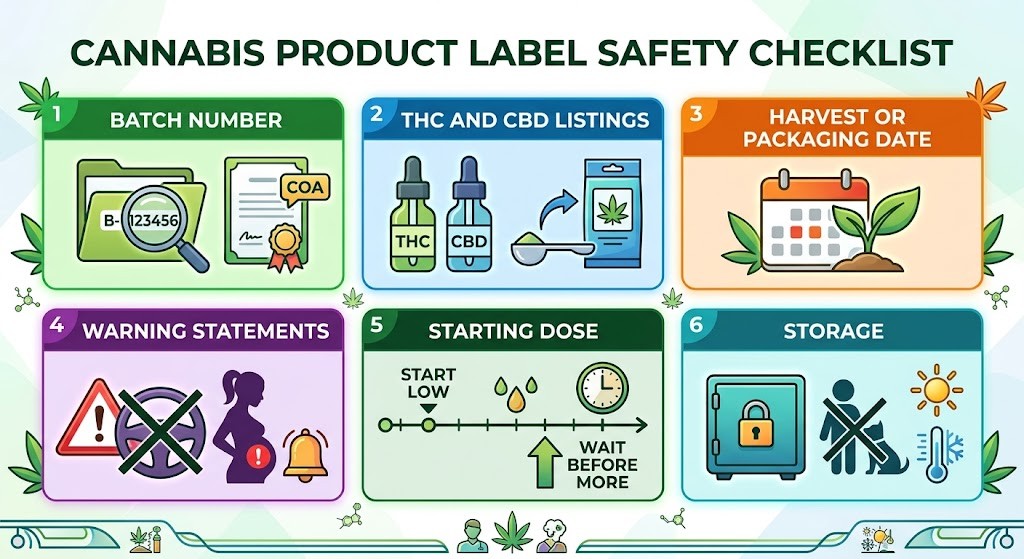
Before you buy or consume any cannabis product, run through this quick checklist:
- Batch number: Confirm it’s listed and matches a certificate of analysis.
- THC and CBD listings: Check whether they’re shown per serving or per package.
- Harvest or packaging date: Look for one to gauge freshness.
- Warning statements: Read them, especially around driving and pregnancy.
- Starting dose: Start low if you’re new to a product, and wait before taking more.
- Storage: Keep products away from children and pets, exactly as labeled.
Following this checklist takes less than a minute at the counter and can prevent an uncomfortable experience later.
Frequently Asked Questions
Is THC Percentage the Same as Potency?
Not exactly. THC percentage is one major factor in a product’s potency, but terpene content, cannabinoid combinations, and individual tolerance all affect how strong a product actually feels. Two products with the same THC percentage can produce noticeably different experiences.
Why Do Some Labels Show THC and THCA Separately?
Labs report THCA separately because it’s the non-intoxicating form of THC found naturally in raw flower. Once heated, THCA converts to active THC, so a label showing high THCA and low listed THC still indicates a potent product once smoked or vaped.
Do All States Require the Same Information on Cannabis Labels?
No. Labeling requirements are set by each state’s cannabis program, so the specific fields, warning language, and serving size limits can vary from state to state. Always check your state’s current regulations, since Florida’s requirements are not the same as those in Ohio, Kentucky, or other states.
What Should I Do if a Product Label Seems Incomplete?
Ask your dispensary staff or physician before purchasing. A missing batch number, expired testing date, or absent certificate of analysis are all worth flagging, since legitimate licensed products are required to carry this information.
Talk to a Physician Before You Buy
Reading a label correctly is only half the equation. The other half is knowing which cannabinoid ratio, dosage, and product type actually fits your condition. A certified marijuana doctor can walk you through both during your evaluation.
If you’re in the Sarasota area, schedule your evaluation with our Sarasota team and get personalized guidance on which products and dosages make sense for you before you ever step into a dispensary.