What Is CBC (Cannabichromene)? What Studies Show
Cannabichromene (CBC) is a lesser-known cannabinoid in the cannabis plant, and most of what is known about it comes from cell and animal studies. Unlike THC, CBC is non-psychoactive: it does not produce a “high”. In mice, CBC raised brain levels of THC, but whether it changes the effects of cannabis in people is not known.
Researchers study CBC because it showed anti-inflammatory and other effects in cell and animal studies, not because it has proven medical uses.
What is Cannabichromene (CBC)?
Cannabichromene (CBC) is a cannabinoid made by the cannabis plant, and it does not produce the “high” that THC does. Like CBD and THC, it is one of several cannabinoids that interact with the body’s endocannabinoid system, including the CB2 receptor. CBC starts as cannabichromenic acid (CBCA), the form the plant makes, which turns into CBC mainly when it is heated.
Unlike THC, CBC showed almost no activity at CB1 receptors in lab tests, which is one reason it isn’t considered a psychoactive cannabinoid. Instead, a cell study found that one of its two mirror-image forms can activate the CB2 receptor and both can activate an ion channel called TRPA1; little is known about its side effects in people.
How Is CBC Different From CBD and THC?
Cannabichromene (CBC), cannabidiol (CBD), and tetrahydrocannabinol (THC) are key cannabinoids with distinct effects:
- CBC (Cannabichromene): CBC activated CB1 receptors in a cell study only at the highest concentration tested, and it is not known to produce a “high.” Only one of its two forms activated CB2 receptors in the 2025 Udoh cell study, though in mice its anti-inflammatory effect did not depend on CB1 or CB2 receptors. How its effects in people compare with CBD’s is not known; most of what is known about CBC comes from cell and animal studies.
- CBD (Cannabidiol): CBD does not cause a high either; a 2008 review found it does not switch on CB1 and CB2 receptors as THC does, and it reaches other targets as well. An FDA-approved CBD drug is used for seizures in three rare epilepsies; evidence for anxiety is small.
- THC (Tetrahydrocannabinol): THC is psychoactive, binding directly to CB1 receptors in the brain, causing a “high.” THC drugs such as dronabinol are approved for chemotherapy nausea and AIDS appetite loss, and THC can cause anxiety and paranoia.
Comparison of CBC, CBD, and THC
- Receptor Interaction:
- CBC: Activated CB2 (one form) and TRPA1 (both forms) in the 2025 Udoh cell study; anti-inflammatory effects seen in mice.
- CBD: In lab work it blocks, rather than mimics, THC-type action at CB1 and CB2, and it has other targets.
- THC: Directly binds to CB1 receptors in the brain, leading to psychoactive effects.
- Psychoactivity:
- CBC and CBD are non-psychoactive, so neither causes a high.
- THC is psychoactive, producing a high by directly affecting CB1 receptors.
- Therapeutic Uses:
- CBC: Studied in animals and cells for inflammation and pain; brain cell findings come from mouse cells in a dish.
- CBD: Approved as Epidiolex for certain seizures; other uses are unproven, and FDA warns of liver injury and drowsiness.
- THC: Prescription THC is approved for chemotherapy nausea and AIDS appetite loss; pain benefits in trials are small.
Unique Properties of CBC
- No high: CBC is not known to intoxicate, and the benefits reported for it come from cell and animal studies, not trials in people.
- Anti-Inflammatory: so far an animal finding from mice; it has not been shown in people.
- Brain cells: the 2013 lab study found CBC helped mouse neural stem cells survive in a dish.
- Combined Effects: In mice, CBC and THC had additive anti-inflammatory effects; whether this happens in people is unknown.
- Side Effects: little is known about CBC’s side effects in people, so it is not known to be safer than THC.
How Is CBC Formed?
CBC forms in the cannabis plant from cannabigerolic acid (CBGA), often called the “mother of all cannabinoids” because THC, CBD and CBC all start from it. Enzymes convert CBGA into the acid forms of THC, CBD and CBC, and the acid form of CBC, cannabichromenic acid (CBCA), becomes CBC mainly when it is heated.
- Starting Compound: CBC begins as CBGA, the precursor to many cannabinoids.
- Enzyme Step: The enzyme CBCA synthase converts CBGA into CBCA inside the plant.
- Heat Step: CBCA becomes CBC mainly when it is heated, a change called decarboxylation.
Biosynthesis of CBC from CBGA (Cannabigerolic Acid)
This chemistry happens in the glandular trichomes, the tiny resin glands that largely occur on female flowers and where the plant’s cannabinoids accumulate. In the living plant, CBC is present mostly as its acid form, CBCA, because acidic cannabinoids are the main forms the plant produces; the heat step in the list above turns it into the neutral form, CBC.
- Where: glandular trichomes, mostly on the female flowers.
- Form in the living plant: mostly CBCA, the acid form.
- When CBC appears: mainly after heating, which turns CBCA into CBC.
Role of Enzymes in Converting CBGA to CBC
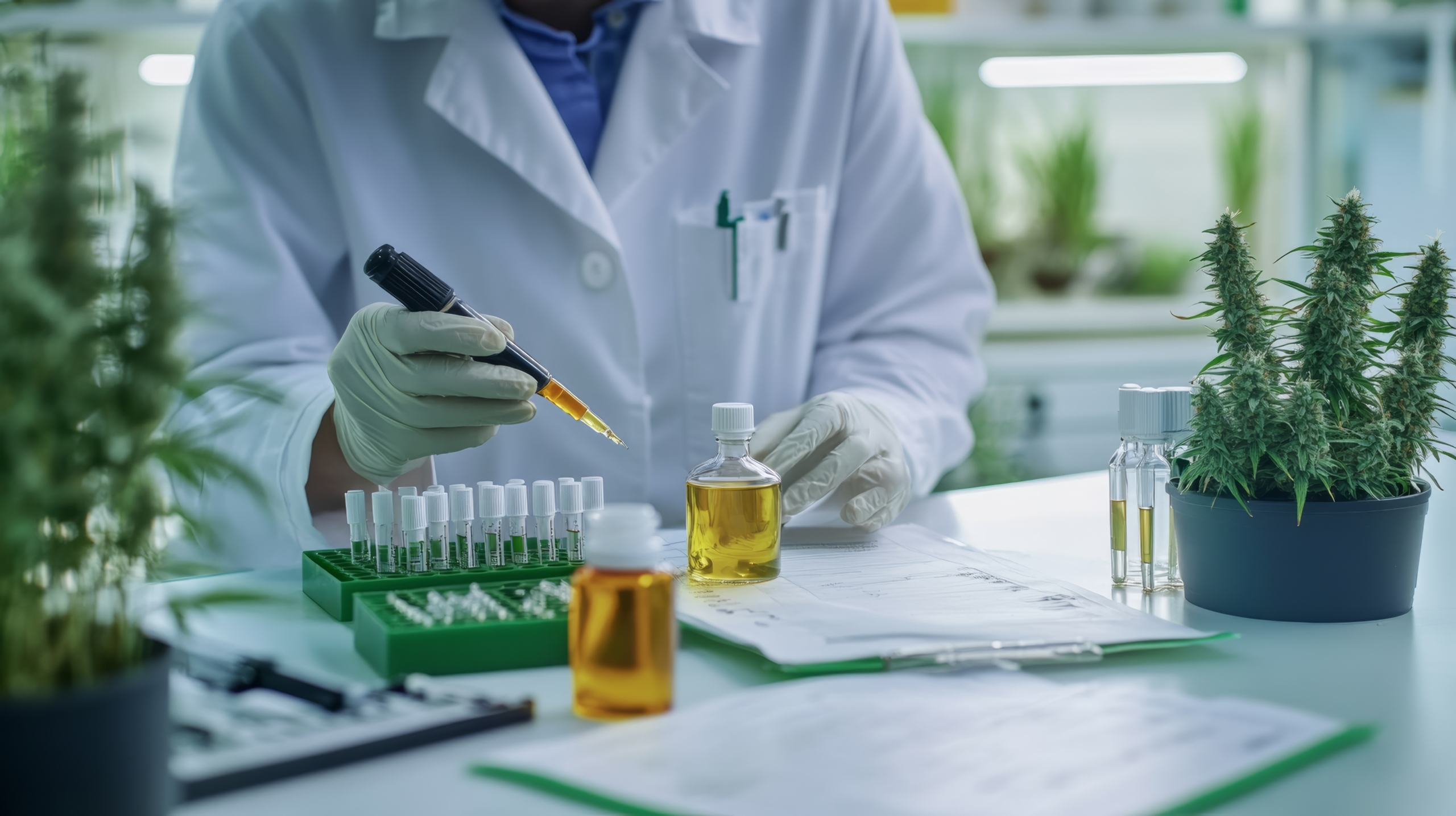
A 1998 study purified the enzyme, CBCA synthase, from cannabis and showed that it turns CBGA into CBCA. It could also use a related compound, cannabinerolic acid, but worked faster with CBGA, so the authors suggested CBCA is made mainly from CBGA. A 2026 study mapped the 3D structures of CBCA synthase and the enzymes behind the acid forms of THC and CBD: the three are closely related, and small differences in their active sites may explain why each makes a different cannabinoid.
- Enzyme: CBCA synthase, purified from cannabis in the 1998 study.
- Preferred starting compound: CBGA, over cannabinerolic acid.
- Related enzymes: CBCA synthase is closely related to the enzymes that make the acid forms of THC and CBD, the 2026 study notes.
CBC in the Cannabis Plant
The last step to CBC is the same one THC and CBD go through. CBCA, like the other cannabinoid acids, turns into its neutral form without help from an enzyme: a 2016 review notes that some of this happens in the growing plant and much more when the harvested plant is heated.
- Occurrence in the Plant: CBC content varies between plants and does not follow the same genetics as THC and CBD, per a 2021 review. A strain name alone does not tell you how much CBC a product holds.
- The concentration of CBC: CBC is usually present in smaller amounts compared to THC and CBD, and the amount differs from plant to plant. Some sellers market high-CBC strains; only a lab report shows how much CBC a product contains.
- Role in Cannabis: CBC is often cited in the “entourage effect” idea, but a 2026 review found the evidence for such combined effects mixed.
If you are curious about CBC or other cannabinoids, a marijuana doctor can explain the evidence and whether you qualify under your state’s law.
Potential Benefits of CBC: What Has Been Studied
CBC does not cause a “high” like THC, and its possible health effects have been studied only in cells and animals.
- Anti-Inflammatory Properties: CBC reduced paw swelling in mice; it has not been shown to help arthritis in people and is not a tested alternative to anti-inflammatory medicines.
- Pain Relief: CBC showed modest pain relief in rodents, according to a 2021 review; human data are lacking.
- Brain Health: Brain claims rest on mouse cell studies, and CBC has not been shown to treat Alzheimer’s.
- Antibacterial Activity in Lab Studies: In a 2008 lab study, CBC was active against MRSA bacteria; it has not been shown to treat infections.
Combined Use and Mental Health
- Combining with Other Cannabinoids: The “entourage effect” idea says compounds act together, but human evidence that CBC adds relief is lacking.
- Mental Health: CBC has not been shown to help depression or anxiety in people, and CDC links cannabis use to depression.
Thinking about CBC for a health problem? A marijuana doctor can explain what is known and what is still unproven.
Comparison with Other Cannabinoids
Set beside CBD and THC, CBC differs in four ways:
- No Psychoactive Effects: Unlike THC, CBC is not known to cause a “high”, and in lab tests it barely activated CB1 receptors.
- Anti-Inflammatory Properties: In mice, CBC reduced swelling through a pathway other than CB1 or CB2.
- Synergy with Other Cannabinoids: Claimed but not shown in people; the mixed evidence is summarized in a 2026 review.
- Unique Interaction: at CB2 receptors, one form of CBC was active in the 2025 Udoh cell study, while CBD does not activate them the way THC does.
What Lab Studies Report About CBC
In lab and animal studies, CBC shows several distinct properties:
- Brain Cells: a 2013 study of mouse cells found CBC helped neural stem cells survive in a dish.
- Antibacterial Activity: the MRSA result listed under Potential Benefits comes from a 2008 lab study.
- Receptor tests: the 2025 Udoh cell study also found that both of CBC’s forms activate TRPA1, a channel in the transient receptor potential family.
- Product Content: Some full-spectrum products contain CBC, and in mice it raised THC levels in the brain.
How Do People Use CBC?
There are several ways to use CBC, depending on your needs and preferences:
- Oils and Tinctures: CBC is sold in oils and tinctures taken under the tongue; unregulated products may not contain what the label says.
- Capsules and Edibles: CBC can be found in capsules or added to food products like gummies. These methods are convenient for those who prefer not to taste the oil.
- Topicals: CBC is sold in creams and lotions, but the evidence for CBC comes from cell and animal studies, not from skin use in people.
To learn how medical marijuana works in Florida, read our Florida medical marijuana laws guide or contact us with your questions.
Potential Side Effects and Safety
Little is known about CBC’s safety in people. Because it barely activated CB1 receptors in lab tests, unlike THC, it is not expected to cause a high or other mind-altering effects. With so little human data, no one can yet say who might react badly to it.
- Possible Side Effects: CBC side effects are not well documented; related products such as CBD can cause sleepiness, diarrhea and mood changes, per FDA.
- Interactions with Medications: CBC could potentially interact with certain medications. Ask a healthcare provider before using CBC, more so if you already take prescription drugs.
- Dosage: No safe or effective CBC dose has been set, so ask a clinician before use and stop if you have side effects.
- Quality Matters: No CBC product is FDA-approved, so purity and safety are not assured. Third-party lab tests can confirm cannabinoid content and screen for contaminants, but not prove safety.
What Is the Bottom Line on CBC?
CBC cannabinoid (cannabichromene) is a compound in cannabis that does not cause a “high” and whose effects in people are still unknown. For those asking, “What is CBC cannabinoid?”, it’s a plant compound studied in cells and animals for inflammation, pain and bacteria. Its safety in people is unknown, so consult a healthcare provider first, especially if you are taking other medications. Knowing how early the research is can help you make informed decisions about CBC.
Last updated October 18, 2026 by the Dr. Green Relief Editorial Team.
Medical review
Medically reviewed by Achilles Kalnoky, M.D.
Reviewed on .
He is licensed in Florida as a medical doctor, license ME115088, which you can check on the Florida Department of Health license lookup.
His review covers the medical statements in this post and the sources cited for them.
Sources
- Zagožen M et al. Cannabigerol and cannabichromene in Cannabis sativa L. Acta Pharm. 2021 (PubMed)
- DeLong GT et al. Pharmacological evaluation of the natural constituent of Cannabis sativa, cannabichromene and its modulation by Δ9-tetrahydrocannabinol. Drug Alcohol Depend. 2010 (PubMed)
- Udoh M et al. Activation of CB2 Receptors by (-)-Cannabichromene but Not (+)-Cannabichromene. Cannabis Cannabinoid Res. 2025 (PubMed)
- Morimoto S et al. Purification and characterization of cannabichromenic acid synthase from Cannabis sativa. Phytochemistry. 1998 (PubMed)
- Domenech J et al. X-ray crystal structures of the cannabinoid synthases CBCAS, CBDAS and THCAS. Curr Res Struct Biol. 2026 (PubMed)
- Elder HJ et al. A Critical Review of the Interactions Between Δ9-THC and Other Naturally Occurring Phytochemical Constituents of Cannabis sativa. Curr Neuropharmacol. 2026 (PubMed)
- Shinjyo N et al. The effect of cannabichromene on adult neural stem/progenitor cells. Neurochem Int. 2013 (PubMed)
- Appendino G et al. Antibacterial cannabinoids from Cannabis sativa: a structure-activity study. J Nat Prod. 2008 (PubMed)
- National Center for Complementary and Integrative Health, Cannabis (Marijuana) and Cannabinoids: What You Need To Know