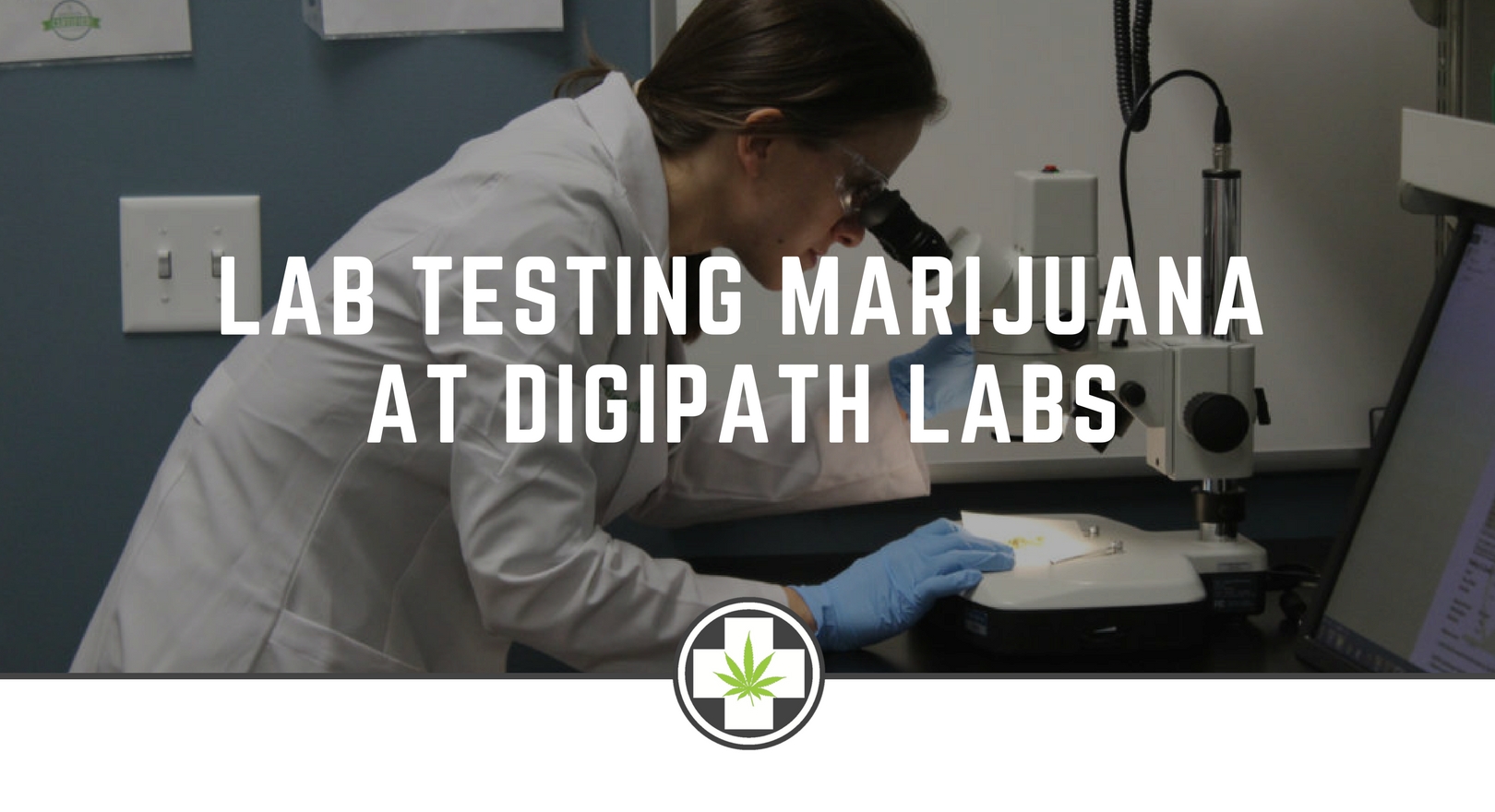
Digipath Labs Tests Medical Marijuana In Las Vegas
Before cannabis is sold in Nevada, a licensed testing lab must test it, and a lot that fails a microbial, residual solvent, pH, water activity or homogeneity test may, with Board approval, be remediated and must then pass every required test, under the Cannabis Compliance Board’s testing rules. I saw how that works on a 2016 visit to Digipath Labs in Las Vegas. Over the years, I’ve been bombarded with all sorts of messaging about the importance of organic, non-GMO, gluten-free, preservative-free, artificial ingredient-free, sugar-free, fat-free (and ultimately taste-free) foods.
The messaging has worked.
I try to eat organic when I can. I try to avoid fast food when I can (In-N-Out Burger doesn’t count). And if I do eat something I shouldn’t be eating, like In-N-Out Burger, I feel really bad about it, just like I’m supposed to.
But with marijuana, I barely think about what’s in it, other than THC. There’s been no intense messaging or ad campaigns designed to make me think twice about the quality of my weed. And why should there be? By 2022, 38 states and D.C. had medical cannabis laws. Back in 2016, I felt lucky just to live in a state that allowed me to purchase medical marijuana at all. Who cares what’s in it?
But the times, they-are-a-changing. Nevada exempted medical marijuana use from state prosecution in 2001, and voters approved recreational marijuana in November 2016.
In the current climate, the question “What’s in your weed?” doesn’t seem so out of place, especially when you read horror stories like this. Microorganisms, pesticides and other contaminants have all been reported in cannabis products.
Mmmm. Nothing like a little E. coli to go along with your cannabis cookies, right?
The Silver State Only Wants “Gold Standard” Medical Marijuana
There’s good news for Nevada residents, though. In 2016 I visited the Las Vegas testing lab Digipath Labs, where Shelby Stanley, its Operations Manager at the time, explained how Nevada’s lab testing rules work.
Under those rules, a failed lot may get a retest or, for some failed tests, a Board-approved remediation, and a lot that clears neither must be destroyed.
On that tour of Digipath Labs, I could tell from the get-go that Shelby was extremely passionate about and committed to the work they did there.
“I want patients to feel comfortable, confident and safe enough with our work that when they walk into a dispensary, they specifically ask for Digipath-certified products,’” Shelby told me. “We also have an open-door policy here. Cultivators, dispensary owners, patients, or anyone else who’s interested in learning more about the work we do is welcome to come down to Digipath and get a tour of our facility.”
What it Means to be “Digipath-Certified”
Licensed labs test whether cannabis exceeds Nevada’s limits for pesticides, microbes, heavy metals and other contaminants. They also measure the potency of each batch and report how much THC, CBD and other compounds it contains. This means testing for beneficial, organic compounds like:
Cannabinoids: The most commonly known cannabinoids are tetrahydrocannabinol (THC) and cannabidiol (CBD), although marijuana plants contain more than 100 other cannabinoids. THC is the one mainly responsible for the “high” feeling we experience when we consume marijuana.
In 2016, the Digipath Labs’ patient handbook made strong claims about what cannabinoids can do.1 Here is what the evidence shows:
We found no NIH or FDA source that supports its claims about anti-inflammatory power or fighting infections. Researchers are studying THC and CBD for pain, muscle spasms, anxiety and other uses, but the evidence in people is still limited, and the FDA has not approved the cannabis plant for any medical use, according to NIH’s NCCIH.
Terpenoids: You know that very distinct smell that weed has? Terpenoids are responsible for that, as well as for the color and taste of marijuana. And although the name sounds a little too much like “turpentine” for my tastes, terpenoids are being studied for possible health effects. Claims that they fight bacteria, fungus or tumors in people are not proven.
Fun fact: terpenoids are also present in medicinal plants like rosemary, basil, lime and lavender. See that? You learn something new every day.
In 2016, Digipath tested usable marijuana, concentrates, edibles and other marijuana-infused products. It took a random sample from every batch before the product hit the market, and results came back within 48 hours. The individual or company who orders the test receives a “certification of analysis (COA),” which shows the amount and type of cannabinoids and terpenoids present, as well as whatever hazardous materials happened to show up.
Marijuana batches that don’t meet the quality testing standards are either destroyed or recycled into a safe, usable product form.
Helping Medical Marijuana Patients Make Better Product Choices
Growers and dispensaries aren’t required to make their certificates of analysis available to the public, but they can and sometimes do, and for good reason.
In 2016, Digipath tested for 11 types of cannabinoids and 22 types of terpenoids. These compounds are not all created equal.
Some are being studied for sleep, anxiety and muscle spasms. FDA-approved cannabinoid drugs treat nausea and vomiting from cancer chemotherapy, but cannabis isn’t helpful for glaucoma, and research on most other conditions is still at an early stage, according to NIH’s National Center for Complementary and Integrative Health.
In order to help patients sort through this maze of chemical compounds, certain growers and dispensaries partnered with Digipath at the time.
Patients who visited those businesses could get a free patient handbook and see the COA for each strain and product sold there.
The handbook listed cannabinoids and terpenoids alongside the symptoms it linked them to, claims we could not confirm with NIH sources. Patients could then compare that list with a strain or product’s COA to see what it contained.
For example:
Let’s say I want a cannabis strain with some CBD, because I have read that THC can make some people anxious. The Digipath patient handbook suggested looking at a strain’s CBD content.
I meet with a dispensary rep and I tell him/her I’m looking for a strain with CBD in it.
The rep says, “Okay, then you should try strains X, Y and Z.”
I say, “That sounds great. Do you have a certificate of analysis for strains X,Y, and Z, so I can see what exactly is in them?”
At that point, the dispensary rep should provide me with a binder or notebook with the COAs inside. That way, I can see the lab results for each strain and be able to confirm how much CBD and THC they actually contain.
Remember: Marijuana is Medicine
Nevada’s strict testing guidelines put a lot of responsibility and burden on cultivators and dispensaries, but in the long run, these standards benefit both the patients and the entire medical marijuana industry. Stigma still exists around marijuana, so it’s important for medical marijuana advocates to keep emphasizing this point: marijuana is a medicine.
By holding itself to the kind of common-sense quality standards that govern other types of medication, the medical marijuana industry makes important steps towards increasing its legitimacy in the eyes of the public.
After all, you are what you eat. And what you smoke.
FOOTNOTES:
- Medical Cannabis Patient Handbook [Pamphlet]. (2016). Las Vegas, NV: Digipath Labs.