Blood Donation While Using Medical Marijuana
Can you donate blood while using medical marijuana? The tests on donated blood look for infections, not THC, but arriving visibly high can get you turned away, so come sober and answer the screening questions honestly. FDA says the whole visit takes about an hour, including questions about your health and travel.
According to the FDA, every two seconds someone in the United States needs a blood transfusion. Yet the FDA notes that only a small percentage of eligible people in the U.S. donate blood in any given year.
The FDA oversees about 11 million units of whole blood donated in the U.S. each year, whichever blood center collects them.
When you go to donate blood, you will be asked to fill out a health questionnaire which is used to determine your eligibility to give blood. Potential disqualifiers include, but are not limited to:
- Use of illegal injectable drugs such as heroin or cocaine
- Use of injectable drugs not prescribed by a physician, like steroids
- Not feeling well, or having an infection that blood can carry, on the day of donation
- If you are pregnant or have been pregnant within the past six weeks (21 CFR 630.10)
- Having gotten a tattoo in the past three months, unless done under sterile conditions at a state-licensed facility
- Having had a blood transfusion, or contact with another person’s blood through a needlestick, in the past three months (FDA, May 2023)
- Testing positive for HIV or Hepatitis B or Hepatitis C
- Having certain medical conditions, which the screening questions ask about
- Receiving certain medical treatments or medications
- Having a new partner or more than one partner and anal sex in the past three months, under FDA’s 2023 individual risk questions
In addition to the things listed above, taking certain medications and having traveled to certain areas of the world may also disqualify you from donating. For example, FDA removed the old variant Creutzfeldt-Jakob disease deferral for time spent in the United Kingdom from 1980 to 1996, so that travel no longer rules you out. FDA also removed the deferral for having received a blood transfusion in the United Kingdom, France or Ireland.
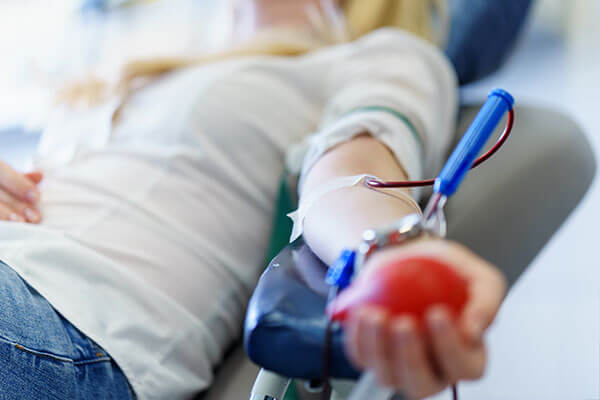
What if I Smoke Cannabis?
Some people who use cannabis want to give blood but hold back for fear of being turned away or, where cannabis is illegal, reported to the police. Here is what screening actually covers.
The tests the FDA lists for donated blood look for infections, not for THC or other cannabinoids. They check for infections blood can carry, such as HIV, hepatitis B and C and syphilis, and each unit is held until it tests clear.
Can You Donate Right After Using Cannabis?
Wait until you are sober. If you arrive at a blood donation center or event visibly high, you might be turned away. Besides visible signs of being high, such as bloodshot eyes, cannabis can make your heart beat faster and raise your blood pressure right after use, according to CDC. In a 2015 controlled study of occasional users, some people still had measurable THC in their blood 8.3 hours after vaping. In the same study, most participants had fallen below a 5 microgram per liter THC level within about 2.3 hours.
If there’s a concern that donated blood might cause the recipient to test positive for cannabis later, here is what the research does and does not show. This gets a little technical, and the short version is that the effect of a donor’s THC on a recipient has not been well studied.
THC builds up in fat tissue, and from there it slowly moves back into the blood, according to a 2013 study. Blood THC peaks soon after inhaling and then falls. How much reaches a transfusion recipient is not well studied: in a 2022 survey of 979 Colorado donors, 23.5% thought using marijuana before donating was acceptable, and the authors called for research on recipients.
A 1986 lab study found THC levels fell 60 to 100% in blood kept in plastic test tubes, but blood bank bags were not tested, so the risk to recipients is not established.
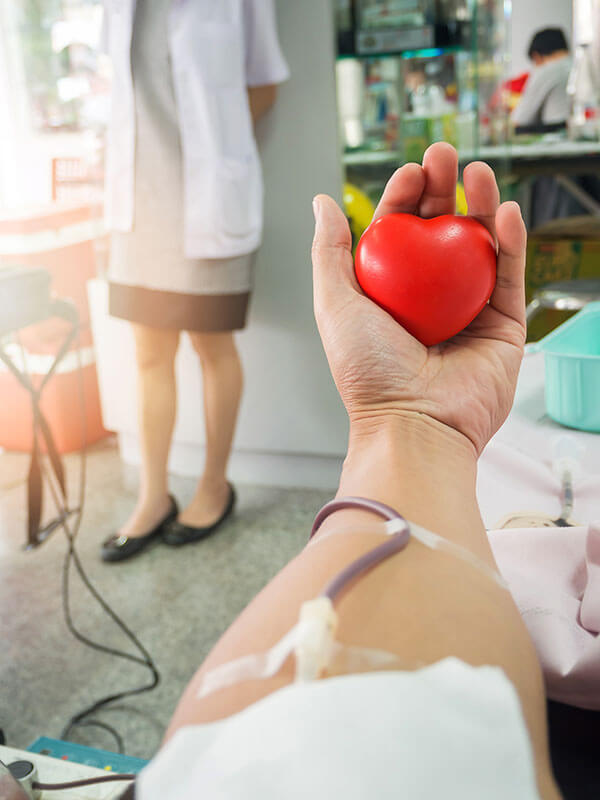
What Do They Test the Blood For?
After a blood donation, several tests are mandatory before the blood is declared safe and banked for future use. They will first test your blood to find its type and Rh factor. Further tests include:
- Testing for infections such as HIV, HTLV, hepatitis B and C
- Testing for syphilis, West Nile virus, Chagas disease and Babesia
Each blood center then follows FDA requirements before a unit is released for patients.
The Takeaway
Blood is needed every day, so regular donors matter. If you’re eligible, donate as often as your blood center’s rules allow. One donation can be separated into red blood cells, platelets and plasma, which can go to different patients. Because donated blood is tested for infections, not THC, the standard tests do not detect cannabis use. Researchers say more study is needed on whether THC in donated blood affects recipients, especially children and pregnant women. If accepted, give blood. Come sober, answer the screening questions honestly, and thank yourself for a good deed.
Last updated October 18, 2026 by the Dr. Green Relief Editorial Team.
Medical review
Medically reviewed by Achilles Kalnoky, M.D.
Reviewed on .
He is licensed in Florida as a medical doctor, license ME115088, which you can check on the Florida Department of Health license lookup.
His review covers the medical statements in this post and the sources cited for them.
Sources
- U.S. Food and Drug Administration, Have You Given Blood Lately?
- U.S. Food and Drug Administration, Recommendations for Evaluating Donor Eligibility Using Individual Risk-Based Questions (May 2023)
- Code of Federal Regulations, 21 CFR 630.10
- Hartman RL et al. Controlled Cannabis Vaporizer Administration: Blood and Plasma Cannabinoids with and without Alcohol. Clin Chem. 2015 (PubMed)
- Annen K, DomBourian MG. Perceptions on acceptability and reported consumption of marijuana by blood donors prior to donation. Vox Sang. 2022 (PubMed)
- Christophersen AS. Tetrahydrocannabinol stability in whole blood: plastic versus glass containers. J Anal Toxicol. 1986 (PubMed)
- Wong A et al. Exercise increases plasma THC concentrations in regular cannabis users. Drug Alcohol Depend. 2013 (PubMed)